
Explore All Articles

All Articles
Article Topic

How effective are TikTok misinformation debunking videos?
Puneet Bhargava, Katie MacDonald, Christie Newton, Hause Lin and Gordon Pennycook
TikTok provides opportunity for citizen-led debunking where users correct other users’ misinformation. In the present study (N=1,169), participants either watched and rated the credibility of (1) a misinformation video, (2) a correction video, or (3) a misinformation video followed by a correction video (“debunking”).
Examining accuracy-prompt efficacy in combination with using colored borders to differentiate news and social content online
Venya Bhardwaj, Cameron Martel and David G. Rand
Recent evidence suggests that prompting users to consider the accuracy of online posts increases the quality of news they share on social media. Here we examine how accuracy prompts affect user behavior in a more realistic context, and whether their effect can be enhanced by using colored borders to differentiate news from social content.

Search engine manipulation to spread pro-Kremlin propaganda
Evan M. Williams and Kathleen M. Carley
The Kremlin’s use of bots and trolls to manipulate the recommendation algorithms of social media platforms is well-documented by many journalists and researchers. However pro-Kremlin manipulation of search engine algorithms has rarely been explored. We examine pro-Kremlin attempts to manipulate search engine results by comparing backlink and keyphrase networks of US, European, and Russian think tanks, as well as Kremlin-linked “pseudo” think tanks that target Western audiences.
Designing misinformation interventions for all:
Perspectives from AAPI, Black, Latino, and Native American community leaders on misinformation educational efforts
Angela Y. Lee, Ryan C. Moore and Jeffrey T. Hancock
This paper examines strategies for making misinformation interventions responsive to four communities of color. Using qualitative focus groups with members of four non-profit organizations, we worked with community leaders to identify misinformation narratives, sources of exposure, and effective intervention strategies in the Asian American Pacific Islander (AAPI), Black, Latino, and Native American communities.
Fact-checking Trump’s election lies can improve confidence in U.S. elections: Experimental evidence
Catie Snow Bailard, Ethan Porter and Kimberly Gross
As the 2020 campaign unfolded, with a mix of extraordinary embellishments and outright falsehoods, President Trump’s attacks on the integrity of the U.S. electoral system grew louder and more frequent. Trump-aligned Republican candidates have since advanced similar false claims in their own campaigns in the lead-up to the 2022 midterm elections.
A pro-government disinformation campaign on Indonesian Papua
Dave McRae, Maria del Mar Quiroga, Daniel Russo-Batterham and Kim Doyle
This research identifies an Indonesian-language Twitter disinformation campaign posting pro-government materials on Indonesian governance in Papua, site of a protracted ethno-nationalist, pro-independence insurgency. Curiously, the campaign does not employ common disinformation tactics such as hashtag flooding or the posting of clickbait with high engagement potential, nor does it seek to build user profiles that would make the accounts posting this material appear as important participants in a debate over Papua’s status.
Where conspiracy theories flourish: A study of YouTube comments and Bill Gates conspiracy theories
Lan Ha, Timothy Graham and Joanne Gray
We studied YouTube comments posted to Covid-19 news videos featuring Bill Gates and found they were dominated by conspiracy theories. Our results suggest the platform’s comments feature operates as a relatively unmoderated social media space where conspiracy theories circulate unchecked. We outline steps that YouTube can take now to improve its approach to moderating misinformation.
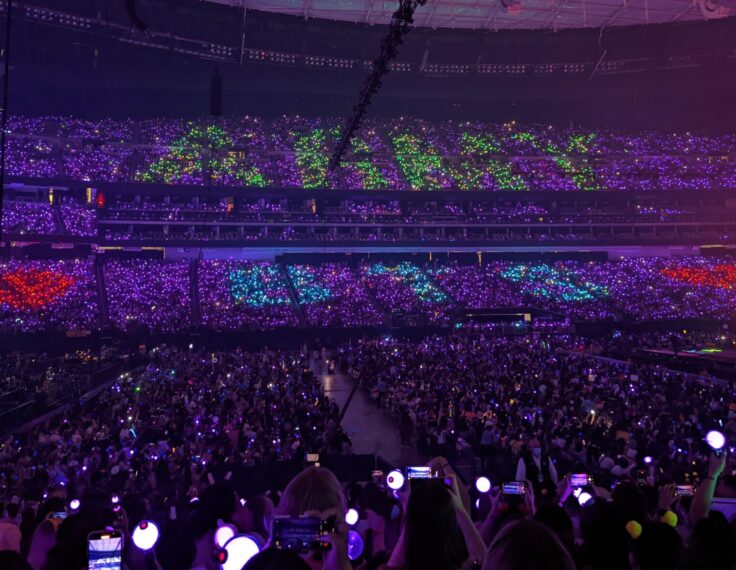
Community-based strategies for combating misinformation: Learning from a popular culture fandom
Jin Ha Lee, Nicole Santero, Arpita Bhattacharya, Emma May and Emma S. Spiro
Through the lens of one of the fastest-growing international fandoms, this study explores everyday misinformation in the context of networked online environments. Findings show that fans experience a range of misinformation, similar to what we see in other political, health, or crisis contexts.
Legislator criticism of a candidate’s conspiracy beliefs reduces support for the conspiracy but not the candidate: Evidence from Marjorie Taylor Greene and QAnon
Victor Wu, John Carey, Brendan Nyhan and Jason Reifler
In November 2020, Georgia Republican Marjorie Taylor Greene became the first open supporter of QAnon to be elected to the United States Congress. Despite criticism from Democrats, Republicans, and the media for her belief in this dangerous conspiracy theory, Greene remains a prominent national figure and a member of Congress.

Audio misinformation on WhatsApp: A case study from Lebanon
Azza El-Masri, Martin J. Riedl and Samuel Woolley
Since 2019, Lebanon has witnessed sequential crises that have routinely spurred media attention. A great deal of misinformation has proliferated during these events, much of it spreading on WhatsApp. One format is particularly understudied: audio instant messages, otherwise known as voice notes.