
Explore All Articles

All Articles
Article Topic

Alternative science against the corrupt elites? The effects of pseudoscience and censorship accusations in health misinformation
Ozan Kuru and Siyu Zhang
Due to extensive regulations, pseudoscience and accusations of censorship are increasingly used as persuasive strategies in health misinformation. How effective are these? This experiment examines the effects of pseudoscientific misinformation about COVID-19 vaccines and genetically modified organisms (GMOs) by accounting for the rhetoric of the “persecuted hero narrative” (Baker, 2022), which involves accusations of censorship against media, platforms, and governments.

Professional and community-based fact-checking show different strengths, but neither performs strongly across trust, scalability, and impact
Petter Bae Brandtzaeg, Silje Susanne Alvestad, Jonas R. Kunst and Asbjørn Følstad
Fact-checking on social media matters more than ever. When Meta abandoned professional fact checkers in 2025 in favour of crowd-sourced annotations, it bet that community participation could substitute for institutional expertise. Our systematic review of 21 empirical studies of social media fact-checking (2022–2025) suggests the picture is more complicated than it appears.

Fact-Checking
“When politicians make claims, we are journalists”: Political fact-checking and social media partnerships
Nathalia Gonzalez, Juliana da Cunha Mota and Nicole Stremlau
This article examines how fact checkers in the EU perceive and respond to tensions between their journalistic commitment to political fact-checking and platform partnership rules that restrict the rating of politicians’ claims. Drawing on interviews and survey responses, we find that they understand their work through a journalistic role conception, including a commitment to scrutinizing political elites.
Amplifying the storm: Climate disinformation dynamics during natural disasters on right-wing extremist Telegram channels
Diego DiMattina, André Sobral and David Nemer
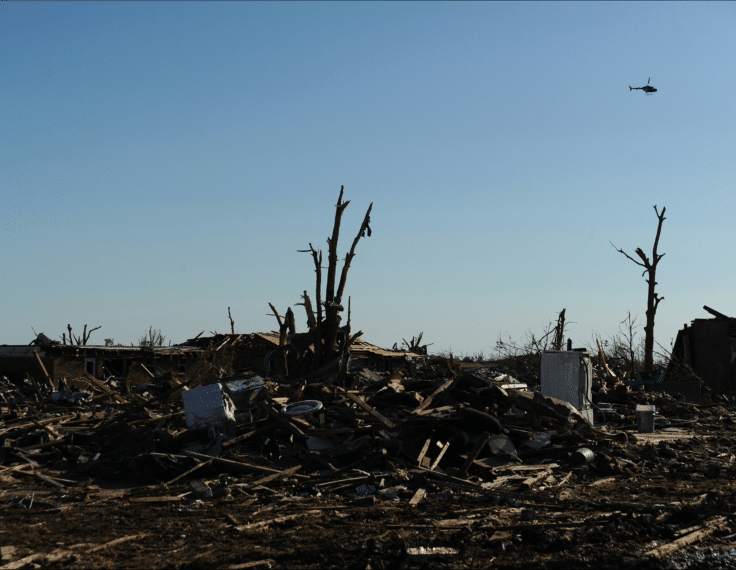
Climate change amplifies natural disasters, posing an existential threat to our society. However, a digital storm is raging on right-wing extremist Telegram channels where climate disinformation works to delegitimize scientific consensus. Investigating the factors that amplify climate disinformation is as critical to combating it as understanding natural disasters and their drivers. We
Fact-Checking
Accountability in name only: Fact-checking under the EU’s Code of Practice on Disinformation
Madalina Botan
Major platforms constantly claim to fight disinformation and support the fact checking community, but their transparency reports and the empirical evidence from a survey of expert fact checkers across 21 EU countries show a different reality. This study finds that despite commitments made under EU regulations, expert fact checkers remain largely peripheral actors within the existing platform governance framework, with limited insight into how their work influences platform decisions.
Fact-Checking
Fact-checking at a crossroads: Fact checkers’ perspectives on Community Notes, AI integration, and design recommendations
Basak Bozkurt, Mohsen Mosleh and Helen Margetts
Social media platforms are increasingly using community-based verification systems, such as Community Notes, and AI systems to flag and contextualize potentially misleading content at scale. While these approaches promise speed and broad coverage, concerns about accuracy, bias, and transparency persist. Drawing on interviews with 29 fact checkers, we find that practitioners see community-based verification and AI Note Writers as complementary tools that can support, but not replace, professional fact-checking.

Quantifying the “misinformation beat”: 38 years of coverage in major U.S. daily newspapers
Bryce Greene, Brian P. Harper and Christena E. Nippert-Eng
Media have made misinformation conversations part of daily life. We looked at nearly four decades’ worth of news stories about misinformation to see exactly what this coverage looked like. We searched five major U.S. daily newspapers for articles containing the misinformation-related terms—disinformation, misinformation, conspiracy theory, fake news, and propaganda—then extracted words in proximity to these key terms to identify associative patterns.

People rely on their existing political beliefs to identify election misinformation
Sora Park, Jee Young Lee, Kieran McGuinness, Caroline Fisher and Janet Fulton
Rather than assuming that people are motivated to fact-check, we investigated the process that people go through when and if they encounter political misinformation. Using a digital diary method, we asked 38 participants to collect examples of political misinformation during Australia’s 2025 federal election and explain why they determined it to be misinformation (n = 254).

Emotional resonance and participatory misinformation: Learning from a K-pop controversy
Sungha Kang, Rachel E. Moran and Jin Ha Lee
In today’s digital media environment, emotionally resonant narratives often spread faster and stick more firmly than verifiable facts. This paper explores how emotionally charged communication in online controversies fosters not only widespread engagement but also the participatory nature of misinformation. Through a case study of a K-pop controversy, we show how audiences act not just as consumers but as co-authors of alternative narratives in moments of uncertainty.
Not so different after all? Antecedents of believing in misinformation and conspiracy theories on COVID-19
Florian Wintterlin
Misinformation and conspiracy theories are often grouped together, but do people believe in them for the same reasons? This study examines how these conceptually distinct forms of deceptive content are processed and believed using the COVID-19 pandemic as context. Surprisingly, despite their theoretical differences, belief in both is predicted by similar psychological factors—particularly conspiracy mentality and the perception that truth is politically constructed—suggesting that underlying distrust in institutions may outweigh differences in types of deceptive content in shaping susceptibility.