Explore All Articles
All Articles
Article Topic
How different incentives reduce scientific misinformation online
Piero Ronzani, Folco Panizza, Tiffany Morisseau, Simone Mattavelli and Carlo Martini
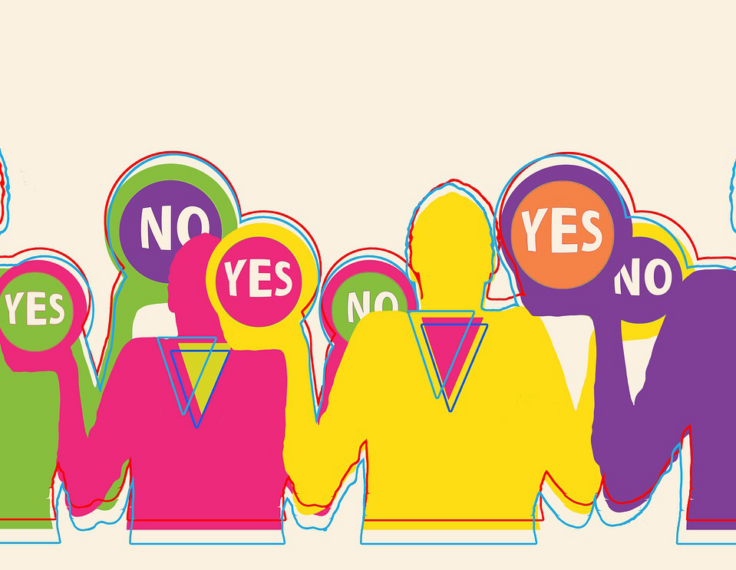
Several social media employ or consider user recruitment as defense against misinformation. Yet, it is unclear how to encourage users to make accurate evaluations. Our study shows that presenting the performance of previous participants increases discernment of science-related news. Making participants aware that their evaluations would be used by future participants had no effect on accuracy.
User experiences and needs when responding to misinformation on social media
Pranav Malhotra, Ruican Zhong, Victor Kuan, Gargi Panatula, Michelle Weng, Andrea Bras, Connie Moon Sehat, Franziska Roesner and Amy Zhang
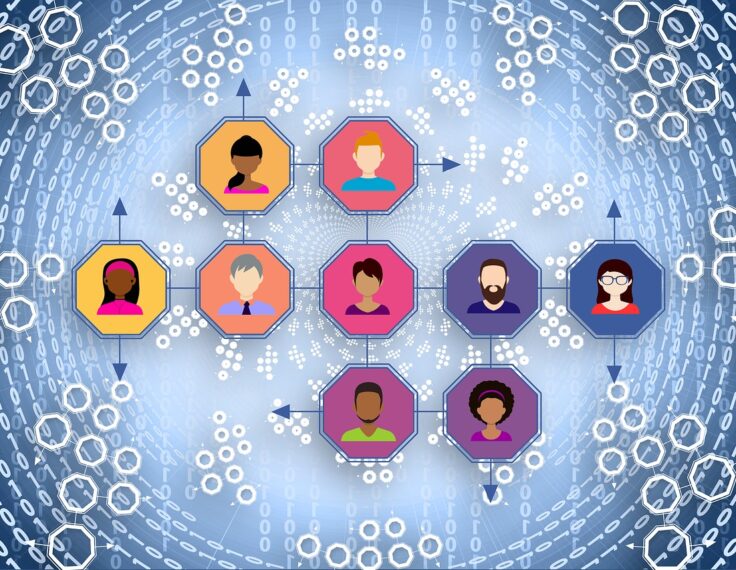
This study examines the experiences of those who participate in bottom-up user-led responses to misinformation on social media and outlines how they can be better supported via software tools. Findings show that users desire support tools designed to minimize time and effort in identifying misinformation and provide tailored suggestions for crafting responses to misinformation that account for emotional and relational context.
Assessing misinformation recall and accuracy perceptions: Evidence from the COVID-19 pandemic
Sarah E. Kreps and Douglas L. Kriner
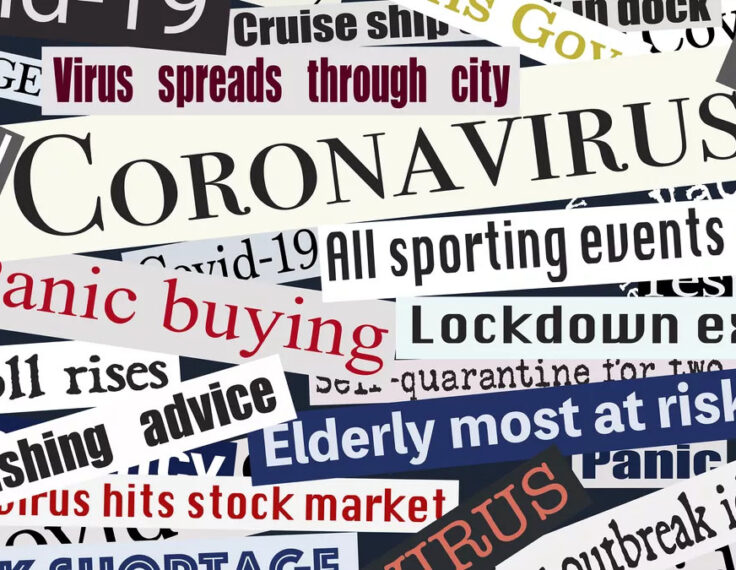
Misinformation is ubiquitous; however, the extent and heterogeneity in public uptake of it remains a matter of debate. We address these questions by exploring Americans’ ability to recall prominent misinformation during the COVID-19 pandemic and the factors associated with accuracy perceptions of these claims.
Who knowingly shares false political information online?
Shane Littrell, Casey Klofstad, Amanda Diekman, John Funchion, Manohar Murthi, Kamal Premaratne, Michelle Seelig, Daniel Verdear, Stefan Wuchty and Joseph E. Uscinski
Some people share misinformation accidentally, but others do so knowingly. To fully understand the spread of misinformation online, it is important to analyze those who purposely share it. Using a 2022 U.S. survey, we found that 14 percent of respondents reported knowingly sharing misinformation, and that these respondents were more likely to also report support for political violence, a desire to run for office, and warm feelings toward extremists.

Does incentivization promote sharing “true” content online?
Hansika Kapoor, Sarah Rezaei, Swanaya Gurjar, Anirudh Tagat, Denny George, Yash Budhwar and Arathy Puthillam
In an online experiment in India, incentives for sharing factual posts increased sharing compared to no incentivization. However, the type of incentive (monetary or social) did not influence sharing behavior in a custom social media simulation. Curbing misinformation may not require substantial monetary resources; in fact, social media platforms can devise ways to socially incentivize their users for being responsible netizens who share true information.
Less reliable media drive interest in anti-vaccine information
Samikshya Siwakoti, Jacob N. Shapiro and Nathan Evans
As progress on vaccine rollout in the United States slowed down in Spring 2021, it became clear that anti-vaccine information posed a public health threat. Using text data from 5,613 distinct COVID misinformation stories and 70 anti-vaccination Facebook groups, we tracked highly salient keywords regarding anti-vaccine discourse across Twitter, thousands of news websites, and the Google and Bing search engines from May through June 2021, a key period when progress on vaccinations very clearly stalled.
Explaining beliefs in electoral misinformation in the 2022 Brazilian election: The role of ideology, political trust, social media, and messaging apps
Patrícia Rossini, Camila Mont’Alverne and Antonis Kalogeropoulos
The 2022 elections in Brazil have demonstrated that disinformation can have violent consequences, particularly when it comes from the top, raising concerns around democratic backsliding. This study leverages a two-wave survey to investigate individual-level predictors of holding electoral misinformation beliefs and the role of trust and information habits during the 2022 Brazilian elections.

How effective are TikTok misinformation debunking videos?
Puneet Bhargava, Katie MacDonald, Christie Newton, Hause Lin and Gordon Pennycook
TikTok provides opportunity for citizen-led debunking where users correct other users’ misinformation. In the present study (N=1,169), participants either watched and rated the credibility of (1) a misinformation video, (2) a correction video, or (3) a misinformation video followed by a correction video (“debunking”).
Examining accuracy-prompt efficacy in combination with using colored borders to differentiate news and social content online
Venya Bhardwaj, Cameron Martel and David G. Rand
Recent evidence suggests that prompting users to consider the accuracy of online posts increases the quality of news they share on social media. Here we examine how accuracy prompts affect user behavior in a more realistic context, and whether their effect can be enhanced by using colored borders to differentiate news from social content.