
Explore All Articles
All Articles
Article Topic

Older Americans are more vulnerable to prior exposure effects in news evaluation
Benjamin A. Lyons
Older news users may be especially vulnerable to prior exposure effects, whereby news comes to be seen as more accurate over multiple viewings. I test this in re-analyses of three two-wave, nationally representative surveys in the United States (N = 8,730) in which respondents rated a series of mainstream, hyperpartisan, and false political headlines (139,082 observations).

Less reliable media drive interest in anti-vaccine information
Samikshya Siwakoti, Jacob N. Shapiro and Nathan Evans
As progress on vaccine rollout in the United States slowed down in Spring 2021, it became clear that anti-vaccine information posed a public health threat. Using text data from 5,613 distinct COVID misinformation stories and 70 anti-vaccination Facebook groups, we tracked highly salient keywords regarding anti-vaccine discourse across Twitter, thousands of news websites, and the Google and Bing search engines from May through June 2021, a key period when progress on vaccinations very clearly stalled.

Explaining beliefs in electoral misinformation in the 2022 Brazilian election: The role of ideology, political trust, social media, and messaging apps
Patrícia Rossini, Camila Mont’Alverne and Antonis Kalogeropoulos
The 2022 elections in Brazil have demonstrated that disinformation can have violent consequences, particularly when it comes from the top, raising concerns around democratic backsliding. This study leverages a two-wave survey to investigate individual-level predictors of holding electoral misinformation beliefs and the role of trust and information habits during the 2022 Brazilian elections.

Where conspiracy theories flourish: A study of YouTube comments and Bill Gates conspiracy theories
Lan Ha, Timothy Graham and Joanne Gray
We studied YouTube comments posted to Covid-19 news videos featuring Bill Gates and found they were dominated by conspiracy theories. Our results suggest the platform’s comments feature operates as a relatively unmoderated social media space where conspiracy theories circulate unchecked. We outline steps that YouTube can take now to improve its approach to moderating misinformation.
Legislator criticism of a candidate’s conspiracy beliefs reduces support for the conspiracy but not the candidate: Evidence from Marjorie Taylor Greene and QAnon
Victor Wu, John Carey, Brendan Nyhan and Jason Reifler
In November 2020, Georgia Republican Marjorie Taylor Greene became the first open supporter of QAnon to be elected to the United States Congress. Despite criticism from Democrats, Republicans, and the media for her belief in this dangerous conspiracy theory, Greene remains a prominent national figure and a member of Congress.
Partisan reasoning in a high stakes environment: Assessing partisan informational gaps on COVID-19
Erik Peterson and Shanto Iyengar
Using a survey conducted in July 2020, we establish a divide in the news sources partisans prefer for information about the COVID-19 pandemic and observe partisan disagreements in beliefs about the virus. These divides persist when respondents face financial costs for incorrectly answering questions.
Research note: Lies and presidential debates: How political misinformation spread across media streams during the 2020 election
Jaren Haber, Lisa Singh, Ceren Budak, Josh Pasek, Meena Balan, Ryan Callahan, Rob Churchill, Brandon Herren and Kornraphop Kawintiranon
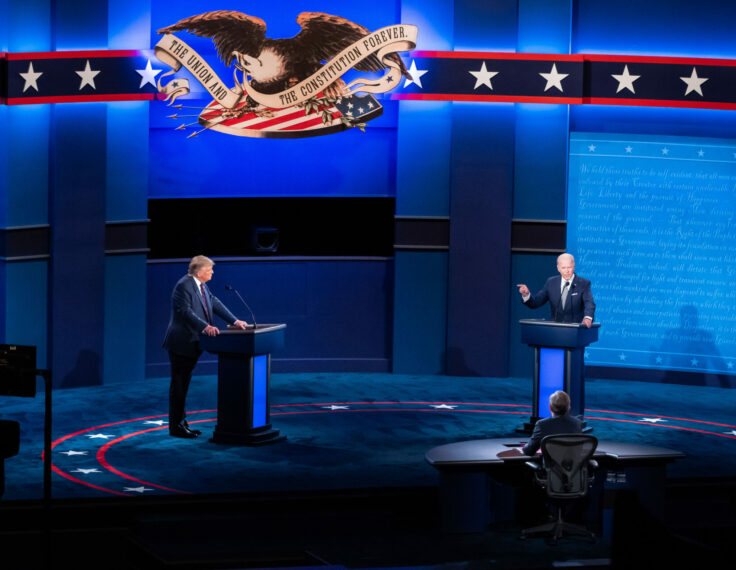
When U.S. presidential candidates misrepresent the facts, their claims get discussed across media streams, creating a lasting public impression. We show this through a public performance: the 2020 presidential debates. For every five newspaper articles related to the presidential candidates, President Donald J.
Research note: This photograph has been altered: Testing the effectiveness of image forensic labeling on news image credibility
Cuihua Shen, Mona Kasra and James F. O’Brien
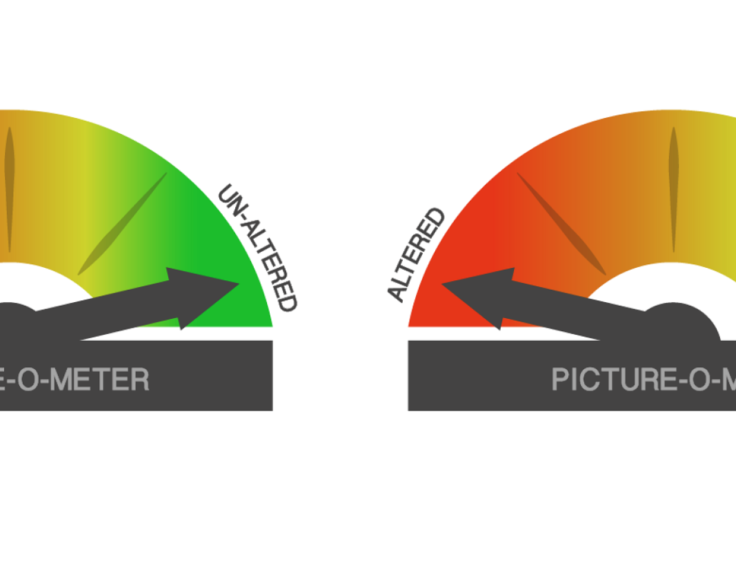
Despite the ubiquity of images and videos in online news environments, much of the existing research on misinformation and its correction is solely focused on textual misinformation, and little is known about how ordinary users evaluate fake or manipulated images and the most effective ways to label and correct such falsities.
Where’s the fake news at? European news consumers’ perceptions of misinformation across information sources and topics
Michael Hameleers, Anna Brosius and Claes H. de Vreese
This study indicates that news users across ten different European countries are quite concerned about misinformation in their information environment. Respondents are most likely to associate politicians, corporations, and foreign actors with misinformation. They perceive misinformation to be most common for topics like immigration, the economy, and the environment.