
Explore All Articles
All Articles
Article Topic

Older Americans are more vulnerable to prior exposure effects in news evaluation
Benjamin A. Lyons
Older news users may be especially vulnerable to prior exposure effects, whereby news comes to be seen as more accurate over multiple viewings. I test this in re-analyses of three two-wave, nationally representative surveys in the United States (N = 8,730) in which respondents rated a series of mainstream, hyperpartisan, and false political headlines (139,082 observations).

Designing misinformation interventions for all:
Perspectives from AAPI, Black, Latino, and Native American community leaders on misinformation educational efforts
Angela Y. Lee, Ryan C. Moore and Jeffrey T. Hancock
This paper examines strategies for making misinformation interventions responsive to four communities of color. Using qualitative focus groups with members of four non-profit organizations, we worked with community leaders to identify misinformation narratives, sources of exposure, and effective intervention strategies in the Asian American Pacific Islander (AAPI), Black, Latino, and Native American communities.
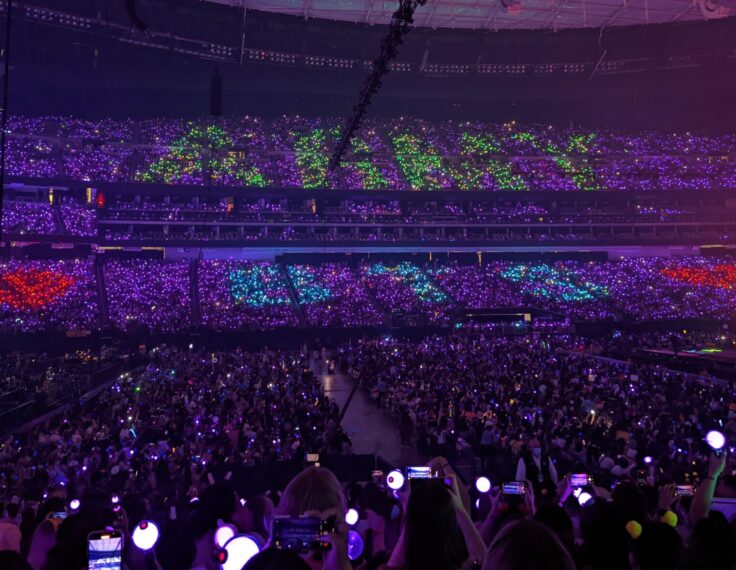
Community-based strategies for combating misinformation: Learning from a popular culture fandom
Jin Ha Lee, Nicole Santero, Arpita Bhattacharya, Emma May and Emma S. Spiro
Through the lens of one of the fastest-growing international fandoms, this study explores everyday misinformation in the context of networked online environments. Findings show that fans experience a range of misinformation, similar to what we see in other political, health, or crisis contexts.
Digital literacy is associated with more discerning accuracy judgments but not sharing intentions
Nathaniel Sirlin, Ziv Epstein, Antonio A. Arechar and David G. Rand
It has been widely argued that social media users with low digital literacy—who lack fluency with basic technological concepts related to the internet—are more likely to fall for online misinformation, but surprisingly little research has examined this association empirically. In a large survey experiment involving true and false news posts about politics and COVID-19, we found that digital literacy is indeed an important predictor of the ability to tell truth from falsehood when judging headline accuracy.

Review of social science research on the impact of countermeasures against influence operations
Laura Courchesne, Julia Ilhardt and Jacob N. Shapiro
Despite ongoing discussion of the need for increased regulation and oversight of social media, as well as debate over the extent to which the platforms themselves should be responsible for containing misinformation, there is little consensus on which interventions work to address the problem of influence operations and disinformation campaigns.
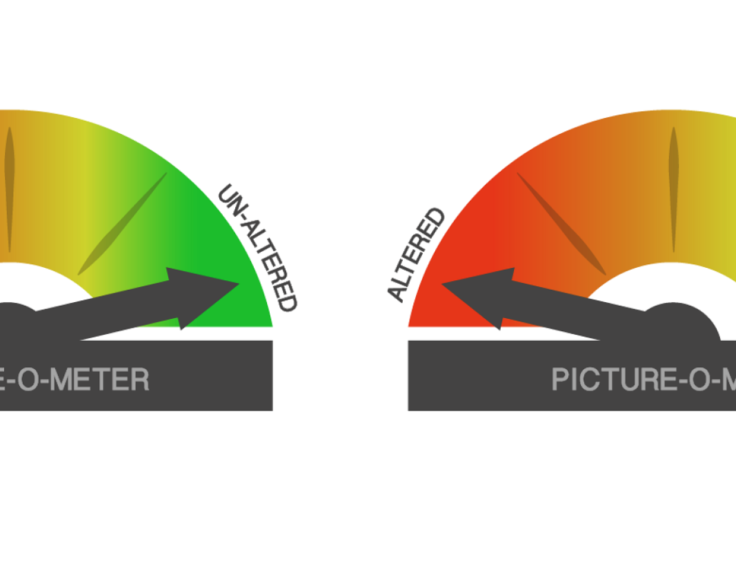
Research note: This photograph has been altered: Testing the effectiveness of image forensic labeling on news image credibility
Cuihua Shen, Mona Kasra and James F. O’Brien
Despite the ubiquity of images and videos in online news environments, much of the existing research on misinformation and its correction is solely focused on textual misinformation, and little is known about how ordinary users evaluate fake or manipulated images and the most effective ways to label and correct such falsities.
Where’s the fake news at? European news consumers’ perceptions of misinformation across information sources and topics
Michael Hameleers, Anna Brosius and Claes H. de Vreese
This study indicates that news users across ten different European countries are quite concerned about misinformation in their information environment. Respondents are most likely to associate politicians, corporations, and foreign actors with misinformation. They perceive misinformation to be most common for topics like immigration, the economy, and the environment.
Research note: Likes, sarcasm and politics: Youth responses to a platform-initiated media literacy campaign on social media
Ioana Literat, Abubakr Abdelbagi, Nicola YL Law, Marcus Y-Y Cheung and Rongwei Tang
To better understand youth attitudes towards media literacy education on social media, and the opportunities and challenges inherent in such initiatives, we conducted a large-scale analysis of user responses to a recent media literacy campaign on TikTok. We found that reactions to the campaign were mixed, and highly political in nature.

Propaganda
“A most mischievous word”: Neil Postman’s approach to propaganda education
Renee Hobbs
Before there was a term called media literacy education, there was an interdisciplinary group of writers and thinkers who taught people to guard themselves against the manipulative power of language. One of the leaders of this group was Neil Postman, known for his best-selling book published in 1985, Amusing Ourselves to Death: Public Discourse in the Age of Show Business.