
Explore All Articles
All Articles
Article Topic

From avoider to challenger: How individuals respond when faced with misinformation
Lauren Scott, Marta E. Cecchinato and Mark Warner
There is a growing expectation for individuals to challenge misinformation, especially as platforms alter their governance processes around false content, shifting towards community-flagging approaches. While research on how individuals respond to exposure to information is developing, findings often taker a broad-brush approach, treating receivers as a single, undifferentiated category, identifying overarching barriers, motivations and coping mechanisms relating to challenging misinformation as opposed to highlighting how these differ between groups of individuals.

Professional and community-based fact-checking show different strengths, but neither performs strongly across trust, scalability, and impact
Petter Bae Brandtzaeg, Silje Susanne Alvestad, Jonas R. Kunst and Asbjørn Følstad
Fact-checking on social media matters more than ever. When Meta abandoned professional fact checkers in 2025 in favour of crowd-sourced annotations, it bet that community participation could substitute for institutional expertise. Our systematic review of 21 empirical studies of social media fact-checking (2022–2025) suggests the picture is more complicated than it appears.

Fact-Checking
“When politicians make claims, we are journalists”: Political fact-checking and social media partnerships
Nathalia Gonzalez, Juliana da Cunha Mota and Nicole Stremlau
This article examines how fact checkers in the EU perceive and respond to tensions between their journalistic commitment to political fact-checking and platform partnership rules that restrict the rating of politicians’ claims. Drawing on interviews and survey responses, we find that they understand their work through a journalistic role conception, including a commitment to scrutinizing political elites.
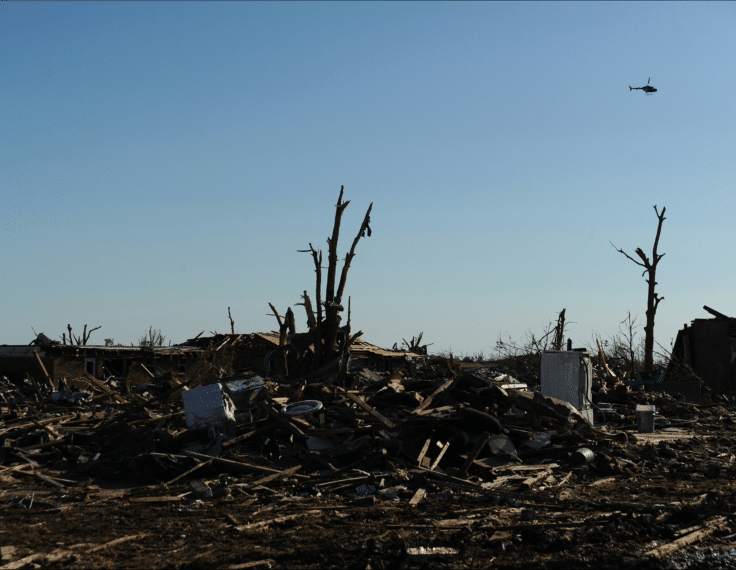
Amplifying the storm: Climate disinformation dynamics during natural disasters on right-wing extremist Telegram channels
Diego DiMattina, André Sobral and David Nemer
Climate change amplifies natural disasters, posing an existential threat to our society. However, a digital storm is raging on right-wing extremist Telegram channels where climate disinformation works to delegitimize scientific consensus. Investigating the factors that amplify climate disinformation is as critical to combating it as understanding natural disasters and their drivers. We

Fact-Checking
Fact-checking in the multipolar AI order: Between epistemic sovereignty and ambivalence
Gregory Asmolov
Fact-checking has become a key response to disinformation during crises and conflicts, but its role is increasingly contested due to concerns about its effectiveness and its co-optation by different political actors. In polarized, high-choice environments, fact-checking is often embedded within partisan and state-aligned infrastructures, shaping validation and rejection of knowledge claims.
Fact-Checking
Accountability in name only: Fact-checking under the EU’s Code of Practice on Disinformation
Madalina Botan
Major platforms constantly claim to fight disinformation and support the fact checking community, but their transparency reports and the empirical evidence from a survey of expert fact checkers across 21 EU countries show a different reality. This study finds that despite commitments made under EU regulations, expert fact checkers remain largely peripheral actors within the existing platform governance framework, with limited insight into how their work influences platform decisions.

Taking the power back: How diaspora community organizations are fighting misinformation spread on encrypted messaging apps
Joao V. S. Ozawa, Samuel Woolley and Josephine Lukito
We applied a mixed-methods approach with the goal of understanding how Latinx and Asian diaspora communities perceive and experience the spread of misinformation through encrypted messaging apps in the United States. Our study consists of 12 in-depth interviews with leaders of relevant diaspora community organizations and a computer-assisted content analysis of 450,300 messages published on Telegram between July 2020 and December 2021.

“Fact-checking” fact checkers: A data-driven approach
Sian Lee, Aiping Xiong, Haeseung Seo and Dongwon Lee
This study examined four fact checkers (Snopes, PolitiFact, Logically, and the Australian Associated Press FactCheck) using a data-driven approach. First, we scraped 22,349 fact-checking articles from Snopes and PolitiFact and compared their results and agreement on verdicts. Generally, the two fact checkers agreed with each other, with only one conflicting verdict among 749 matching claims after adjusting minor rating differences.

Did the Musk takeover boost contentious actors on Twitter?
Christopher Barrie
After his acquisition of Twitter, Elon Musk pledged to overhaul verification and moderation policies. These events sparked fears of a rise in influence of contentious actors—notably from the political right. I investigated whether these actors did receive increased engagement over this period by gathering tweet data for accounts that purchased blue-tick verification before and after the Musk takeover.