
Explore All Articles

All Articles
Article Topic

Cognitive reflection is associated with greater truth discernment for COVID-19 headlines, less trust but greater use of formal information sources, and greater willingness to pay for masks among social media users in Pakistan
Ayesha Ali and Ihsan Ayyub Qazi
We evaluated the relationship between individual differences in cognitive reflection and the ability to discern between true and false COVID-19 information, trust in information sources for receiving COVID-19 information and willingness to pay (WTP) for masks, using a sample of 621 low- and middle-income users in Pakistan.

Measuring the effect of Facebook’s downranking interventions against groups and websites that repeatedly share misinformation
Emmanuel M. Vincent, Héloïse Théro and Shaden Shabayek
Facebook has claimed to fight misinformation notably by reducing the virality of posts shared by “repeat offender” websites. The platform recently extended this policy to groups. We identified websites and groups that repeatedly publish false information according to fact checkers and investigated the implementation and impact of Facebook’s measures against them.

Clarity for friends, confusion for foes: Russian vaccine propaganda in Ukraine and Serbia
Katrina Keegan
This paper examines how Russia tailors its vaccine propaganda to hostile and friendly audiences, like Ukraine and Serbia. Web scraping of all articles about vaccines on Russian state-owned websites from December 2020 to November 2021 provided data for quantitative topic modeling and qualitative analysis.
Who is afraid of fake news? Modeling risk perceptions of misinformation in 142 countries
Aleksi Knuutila, Lisa-Maria Neudert and Philip N. Howard
Using survey data from 154,195 respondents in 142 countries, we investigate internet user perceptions of the risks associated with being exposed to misinformation. We find that: 1) The majority of regular internet users globally (58.5%) worry about misinformation, and young and low-income groups are most likely to be concerned. 2) Risk perception among internet users varies starkly across regions whereby concern is highest in Latin America and the Caribbean (74.2%), and lowest in South Asia (31.2%). 3)
Partisan reasoning in a high stakes environment: Assessing partisan informational gaps on COVID-19
Erik Peterson and Shanto Iyengar
Using a survey conducted in July 2020, we establish a divide in the news sources partisans prefer for information about the COVID-19 pandemic and observe partisan disagreements in beliefs about the virus. These divides persist when respondents face financial costs for incorrectly answering questions.

Hide and seek: The connection between false beliefs and perceptions of government transparency
Mathieu Lavigne, Éric Bélanger, Richard Nadeau, Jean-François Daoust and Erick Lachapelle
This research examines how false beliefs shape perceptions of government transparency in times of crisis. Measuring transparency perceptions using both closed- and open-ended questions drawn from a Canadian panel survey, we show that individuals holding false beliefs about COVID-19 are more likely to have negative perceptions of government transparency.
A story of (non)compliance, bias, and conspiracies: How Google and Yandex represented Smart Voting during the 2021 parliamentary elections in Russia
Mykola Makhortykh, Aleksandra Urman and Mariëlle Wijermars
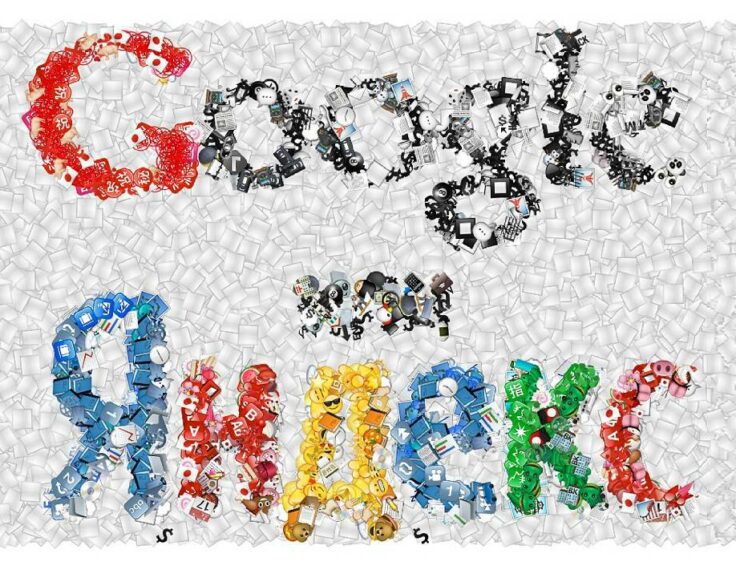
On 3 September 2021, the Russian court forbade Google and Yandex to display search results for “Smart Voting,” the query referring to a tactical voting project by the jailed Russian opposition leader Alexei Navalny. To examine whether the two search engines complied with the court order, we collected top search outputs for the query from Google and Yandex.

Ridiculing the “tinfoil hats:” Citizen responses to COVID-19 misinformation in the Danish facemask debate on Twitter
Nicklas Johansen, Sara Vera Marjanovic, Cathrine Valentin Kjaer, Rebekah Brita Baglini and Rebecca Adler-Nissen
We study how citizens engage with misinformation on Twitter in Denmark during the COVID-19 pandemic. We find that misinformation regarding facemasks is not corrected through counter-arguments or fact-checking. Instead, many tweets rejecting misinformation use humor to mock misinformation spreaders, whom they pejoratively label wearers of “tinfoil hats.”
Chinese state media Facebook ads are linked to changes in news coverage of China worldwide
Arjun M. Tambe and Toni Friedman
We studied the relationship between Facebook advertisements from Chinese state media on the global media environment by examining the link between advertisements and online news coverage of China by other countries. We found that countries that see a large increase in views of Facebook advertisement from Chinese state media also see news coverage of China become more positive.
Digital literacy is associated with more discerning accuracy judgments but not sharing intentions
Nathaniel Sirlin, Ziv Epstein, Antonio A. Arechar and David G. Rand
It has been widely argued that social media users with low digital literacy—who lack fluency with basic technological concepts related to the internet—are more likely to fall for online misinformation, but surprisingly little research has examined this association empirically. In a large survey experiment involving true and false news posts about politics and COVID-19, we found that digital literacy is indeed an important predictor of the ability to tell truth from falsehood when judging headline accuracy.