
Explore All Articles

All Articles
Article Topic

The presence of unexpected biases in online fact-checking
Sungkyu Park, Jaimie Yejean Park, Jeong-han Kang and Meeyoung Cha
The increasing amount of information online makes it challenging to judge what to believe or discredit. Fact-checking unverified claims shared on platforms, like social media, can play a critical role in correcting misbeliefs. The current study demonstrates how the effect of fact-checking can vary by several factors.
Elections
Retracted: Disinformation creep: ADOS and the strategic weaponization of breaking news
Mutale Nkonde, Maria Y. Rodriguez, Leonard Cortana, Joan K. Mukogosi, Shakira King, Ray Serrato, Natalie Martinez, Mary Drummer, Ann Lewis and Momin M. Malik
In this essay, we conduct a descriptive content analysis from a sample of a dataset made up of 534 thousand scraped tweets, supplemented with access to 1.36 million tweets from the Twitter firehose, from accounts that used the #ADOS hashtag between November 2019 and September 2020.

Conspiracy and debunking narratives about COVID-19 origins on Chinese social media: How it started and who is to blame
Kaiping Chen, Anfan Chen, Jingwen Zhang, Jingbo Meng and Cuihua Shen
This paper studies conspiracy and debunking narratives about the origins of COVID-19 on a major Chinese social media platform, Weibo, from January to April 2020. Popular conspiracies about COVID-19 on Weibo, including that the virus is human-synthesized or a bioweapon, differ substantially from those in the United States.
The different forms of COVID-19 misinformation and their consequences
Adam M. Enders, Joseph E. Uscinski, Casey Klofstad and Justin Stoler
As the COVID-19 pandemic progresses, an understanding of the structure and organization of beliefs in pandemic conspiracy theories and misinformation becomes increasingly critical for addressing the threat posed by these dubious ideas. In polling Americans about beliefs in 11 such ideas, we observed clear groupings of beliefs that correspond with different individual-level characteristics (e.g.,
Breaking Harmony Square: A game that “inoculates” against political misinformation
Jon Roozenbeek and Sander van der Linden
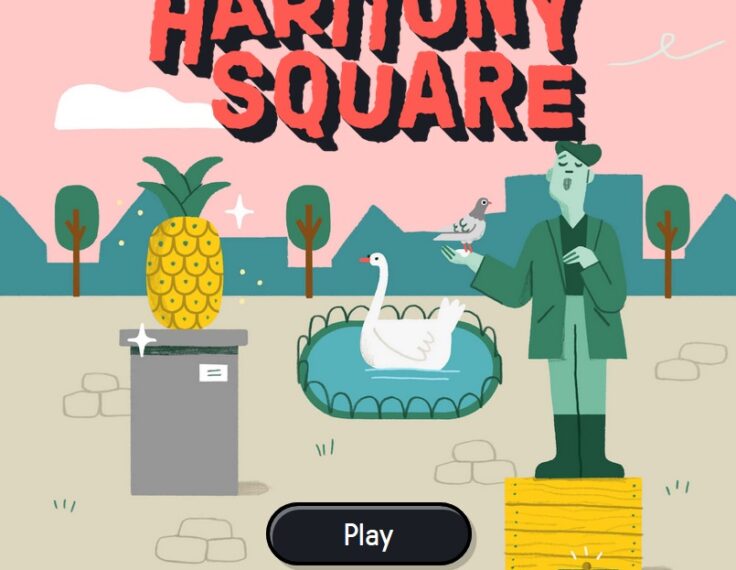
We present Harmony Square, a short, free-to-play online game in which players learn how political misinformation is produced and spread. We find that the game confers psychological resistance against manipulation techniques commonly used in political misinformation: players from around the world find social media content making use of these techniques significantly less reliable after playing, are more confident in their ability to spot such content, and less likely to report sharing it with others in their network.
Elections
State media warning labels can counteract the effects of foreign misinformation
Jack Nassetta and Kimberly Gross
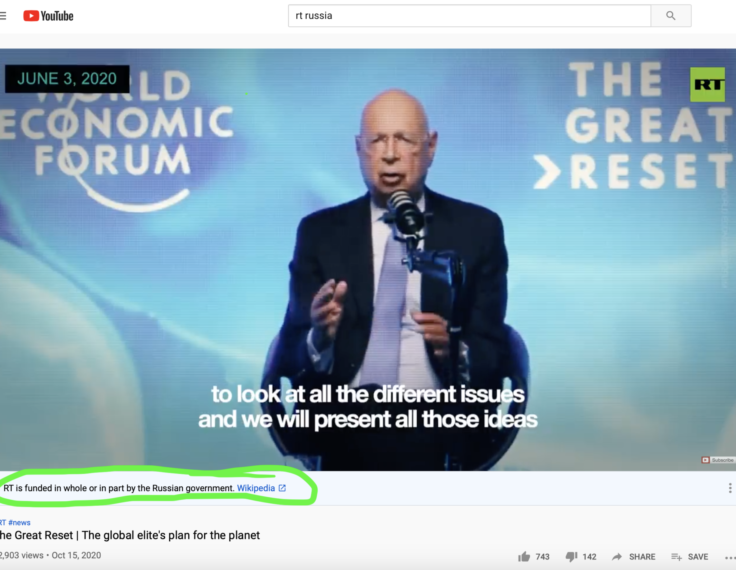
Platforms are increasingly using transparency, whether it be in the form of political advertising disclosures or a record of page name changes, to combat disinformation campaigns. In the case of state-controlled media outlets on YouTube, Facebook, and Twitter this has taken the form of labeling their connection to a state.

Overcoming resistance to COVID-19 vaccine adoption: How affective dispositions shape views of science and medicine
John E. Newhagen and Erik P. Bucy
Health experts worry that a COVID-19 vaccine boycott could inhibit reaching “herd immunity,” and their concerns have only grown as the pandemic has spread. Concern has largely focused on anti-vaccine protestors, who captured headlines as they stood side by side with Tea Party activists and armed militia groups demonstrating against the quarantine in April and May of this year.

COVID-19
The Twitter origins and evolution of the COVID-19 “plandemic” conspiracy theory
Matthew D. Kearney, Shawn C. Chiang and Philip M. Massey
Tweets about “plandemic” (e.g., #plandemic)—the notion that the COVID-19 pandemic was planned or fraudulent—helped to spread several distinct conspiracy theories related to COVID-19. But the term’s catchy nature attracted attention from anti-vaccine activist filmmakers who ultimately created Plandemic the 26-minute documentary.

COVID-19
The weaponization of web archives: Data craft and COVID-19 publics
Amelia Acker and Mitch Chaiet
An unprecedented volume of harmful health misinformation linked to the coronavirus pandemic has led to the appearance of misinformation tactics that leverage web archives in order to evade content moderation on social media platforms. Here we present newly identified manipulation techniques designed to maximize the value, longevity, and spread of harmful and non-factual content across social media using provenance information from web archives and social media analytics.

COVID-19
Anger contributes to the spread of COVID-19 misinformation
Jiyoung Han, Meeyoung Cha and Wonjae Lee
A survey conducted over South Korean adults (N=513) reveals that emotions, specifically anger, contribute to the broader spread of misinformation on COVID-19 by leading angry individuals to consider false claims to be “scientifically credible.” This pattern is more evident among conservatives than liberals.