
Explore All Articles
All Articles
Article Topic
How social media users get their news: The informational value of memes, hot takes, call outs, and comment threads during breaking events
Agata Stepnik and Joanne Gray
An increasing number of people globally say they avoid the news. But are they avoiding the news or the news media? In a longitudinal ethnographic study of Australian social media users, we repeatedly observed self-identified news avoiders encountering information about major news events, in the form of memes, hot takes, call outs, and comment threads.

Disinformation in practice: Threats, actors, mechanisms, and constraints according to practitioners
Grégoire Darcy and Sacha Altay
How do the practitioners charged with fighting disinformation understand the problem they are meant to solve? We surveyed 106 French practitioners across military, government, regulatory, civil-society, and media organizations. These practitioners converge on an upstream, supply-side diagnosis (platforms and amplification structures, rather than public demand, drive the spread of disinformation) but describe a field blocked by weak coordination, scarce resources, and fear of censorship accusations.
Turning OSINV inside the machine: Open-source investigations and information disorder
Philip Di Salvo
Open-source investigators and OSINV journalists have spent the last decade turning publicly available data into evidence of war crimes, environmental harms, and human rights abuses. More recently, they have trained the same lens on a different target: the algorithms, bot networks, and generative AI systems that industrialise deception and information disorder.
Disparities by design: Toward a research agenda that links science misinformation and socioeconomic marginalization in the age of AI
Miriam Schirmer, Nathan Walter and Emőke-Ágnes Horvát
Misinformation research often draws optimistic conclusions, with fact-checking, for example, being established as an effective means of reducing false beliefs. However, it rarely considers the details of socioeconomic disparities that often shape who is most vulnerable to science misinformation. Historical and systemic inequalities have fostered mistrust in institutions, limiting access to credible information, for example, when Black patients distrust public health guidance due to past medical racism.
Gamified inoculation reduces susceptibility to misinformation from political ingroups
Cecilie Steenbuch Traberg, Jon Roozenbeek and Sander van der Linden
Psychological inoculation interventions, which seek to pre-emptively build resistance against unwanted persuasion attempts, have shown promise in reducing susceptibility to misinformation. However, as many people receive news from popular, mainstream ingroup sources (e.g., a left-wing person consuming left-wing media) which may host misleading or false content, and as ingroup sources may be more persuasive, the impact of source effects on inoculation interventions demands attention.

Debunking and exposing misinformation among fringe communities: Testing source exposure and debunking anti-Ukrainian misinformation among German fringe communities
Johannes Christiern Santos Okholm, Amir Ebrahimi Fard and Marijn ten Thij
Through an online field experiment, we test traditional and novel counter-misinformation strategies among fringe communities. Though generally effective, traditional strategies have not been tested in fringe communities, and do not address the online infrastructure of misinformation sources supporting such consumption. Instead, we propose to activate source criticism by exposing sources’ unreliability.
Measuring what matters: Investigating what new types of assessments reveal about students’ online source evaluations
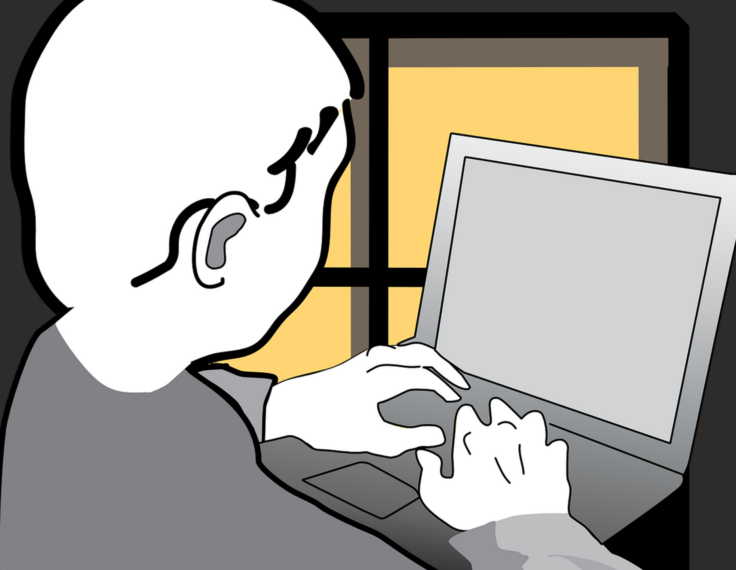
Joel Breakstone, Sarah McGrew and Mark Smith
A growing number of educational interventions have shown that students can learn the strategies fact checkers use to efficiently evaluate online information. Measuring the effectiveness of these interventions has required new approaches to assessment because extant measures reveal too little about the processes students use to evaluate live internet sources.
Assessing misinformation recall and accuracy perceptions: Evidence from the COVID-19 pandemic
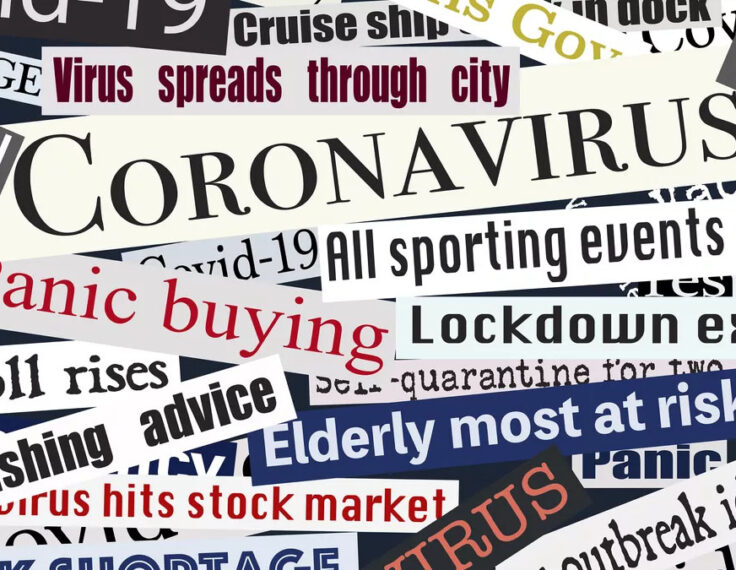
Sarah E. Kreps and Douglas L. Kriner
Misinformation is ubiquitous; however, the extent and heterogeneity in public uptake of it remains a matter of debate. We address these questions by exploring Americans’ ability to recall prominent misinformation during the COVID-19 pandemic and the factors associated with accuracy perceptions of these claims.
Support for “doing your own research” is associated with COVID-19 misperceptions and scientific mistrust
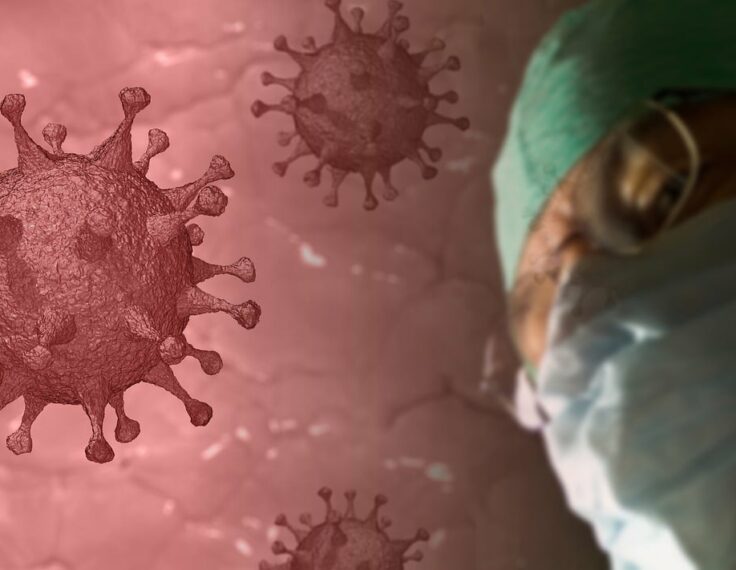
Sedona Chinn and Ariel Hasell
Amid concerns about misinformation online and bias in news, there are increasing calls on social media to “do your own research.” In an abundant information environment, critical media consumption and information validation are desirable. However, using panel survey data, we find that positive perceptions toward “doing your own research” are associated with holding more misperceptions about COVID-19 and less trust in science over time.