
Explore All Articles
All Articles
Article Topic
A pro-government disinformation campaign on Indonesian Papua
Dave McRae, Maria del Mar Quiroga, Daniel Russo-Batterham and Kim Doyle
This research identifies an Indonesian-language Twitter disinformation campaign posting pro-government materials on Indonesian governance in Papua, site of a protracted ethno-nationalist, pro-independence insurgency. Curiously, the campaign does not employ common disinformation tactics such as hashtag flooding or the posting of clickbait with high engagement potential, nor does it seek to build user profiles that would make the accounts posting this material appear as important participants in a debate over Papua’s status.
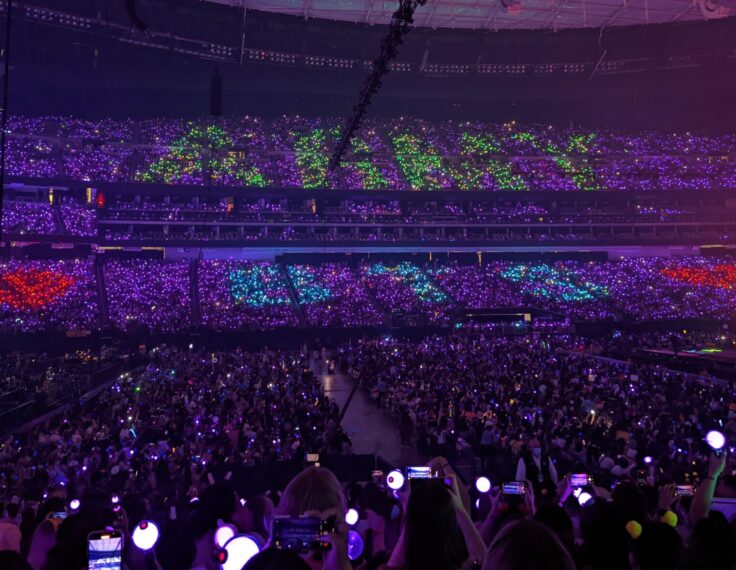
Community-based strategies for combating misinformation: Learning from a popular culture fandom
Jin Ha Lee, Nicole Santero, Arpita Bhattacharya, Emma May and Emma S. Spiro
Through the lens of one of the fastest-growing international fandoms, this study explores everyday misinformation in the context of networked online environments. Findings show that fans experience a range of misinformation, similar to what we see in other political, health, or crisis contexts.

Ridiculing the “tinfoil hats:” Citizen responses to COVID-19 misinformation in the Danish facemask debate on Twitter
Nicklas Johansen, Sara Vera Marjanovic, Cathrine Valentin Kjaer, Rebekah Brita Baglini and Rebecca Adler-Nissen
We study how citizens engage with misinformation on Twitter in Denmark during the COVID-19 pandemic. We find that misinformation regarding facemasks is not corrected through counter-arguments or fact-checking. Instead, many tweets rejecting misinformation use humor to mock misinformation spreaders, whom they pejoratively label wearers of “tinfoil hats.”
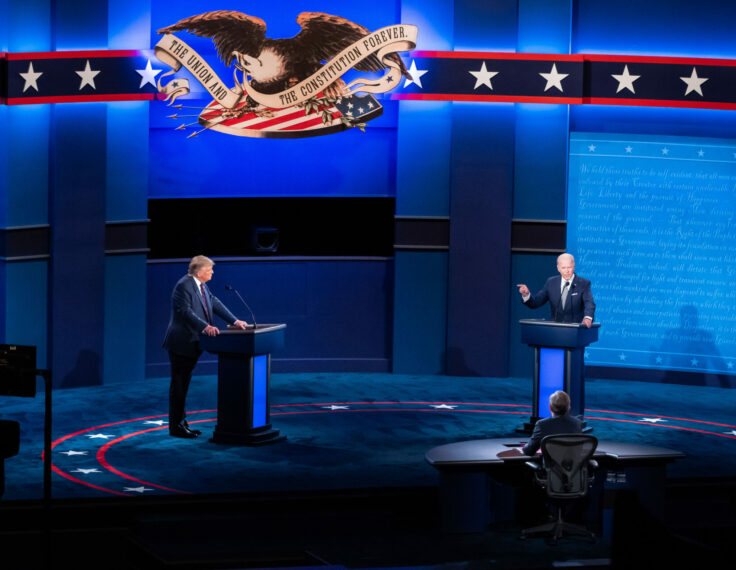
Research note: Lies and presidential debates: How political misinformation spread across media streams during the 2020 election
Jaren Haber, Lisa Singh, Ceren Budak, Josh Pasek, Meena Balan, Ryan Callahan, Rob Churchill, Brandon Herren and Kornraphop Kawintiranon
When U.S. presidential candidates misrepresent the facts, their claims get discussed across media streams, creating a lasting public impression. We show this through a public performance: the 2020 presidential debates. For every five newspaper articles related to the presidential candidates, President Donald J.

Research note: Examining how various social media platforms have responded to COVID-19 misinformation
Nandita Krishnan, Jiayan Gu, Rebekah Tromble and Lorien C. Abroms
We analyzed community guidelines and official news releases and blog posts from 12 leading social media and messaging platforms (SMPs) to examine their responses to COVID-19 misinformation. While the majority of platforms stated that they prohibited COVID-19 misinformation, the responses of many platforms lacked clarity and transparency.
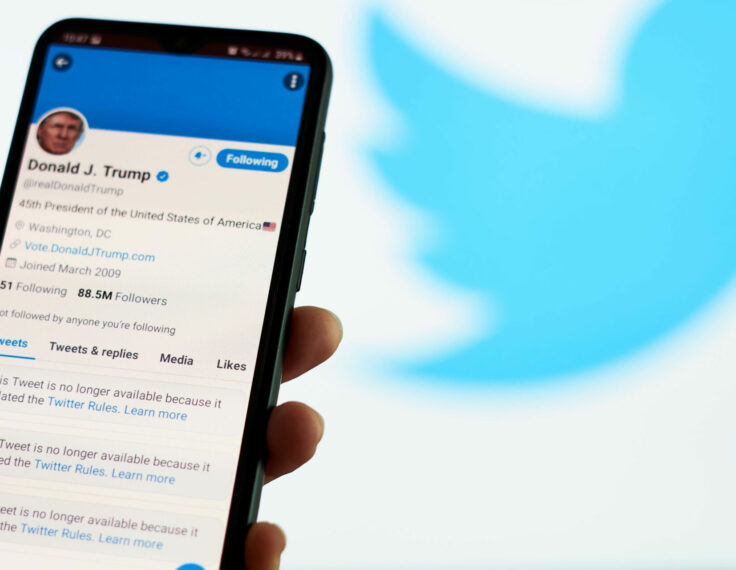
Twitter flagged Donald Trump’s tweets with election misinformation: They continued to spread both on and off the platform
Zeve Sanderson, Megan A. Brown, Richard Bonneau, Jonathan Nagler and Joshua A. Tucker
We analyze the spread of Donald Trump’s tweets that were flagged by Twitter using two intervention strategies—attaching a warning label and blocking engagement with the tweet entirely. We find that while blocking engagement on certain tweets limited their diffusion, messages we examined with warning labels spread further on Twitter than those without labels.
Elections
Source alerts can reduce the harms of foreign disinformation
Jason Ross Arnold, Alexandra Reckendorf and Amanda L. Wintersieck
Social media companies have begun to use content-based alerts in their efforts to combat mis- and disinformation, including fact-check corrections and warnings of possible falsity, such as “This claim about election fraud is disputed.” Another harm reduction tool, source alerts, can be effective when a hidden foreign hand is known or suspected.
How COVID drove the evolution of fact-checking
Samikshya Siwakoti, Kamya Yadav, Nicola Bariletto, Luca Zanotti, Ulas Erdogdu and Jacob N. Shapiro
With the outbreak of the coronavirus pandemic came a flood of novel misinformation. Ranging from harmless false cures to dangerous rhetoric targeting minorities, coronavirus-related misinformation spread quickly wherever the virus itself did. Fact-checking organizations around the world took up the charge against misinformation, essentially crowdsourcing the task of debunking false narratives.
Elections
COVID-19 misinformation and the 2020 U.S. presidential election
Emily Chen, Herbert Chang, Ashwin Rao, Kristina Lerman, Geoffrey Cowan and Emilio Ferrara
Voting is the defining act for a democracy. However, voting is only meaningful if public deliberation is grounded in veritable and equitable information. This essay investigates the politicization of public health practices during the Democratic primaries in the context of the 2020 U.S.