
Explore All Articles
All Articles
Article Topic
Professional and community-based fact-checking show different strengths, but neither performs strongly across trust, scalability, and impact
Petter Bae Brandtzaeg, Silje Susanne Alvestad, Jonas R. Kunst and Asbjørn Følstad
Fact-checking on social media matters more than ever. When Meta abandoned professional fact checkers in 2025 in favour of crowd-sourced annotations, it bet that community participation could substitute for institutional expertise. Our systematic review of 21 empirical studies of social media fact-checking (2022–2025) suggests the picture is more complicated than it appears.
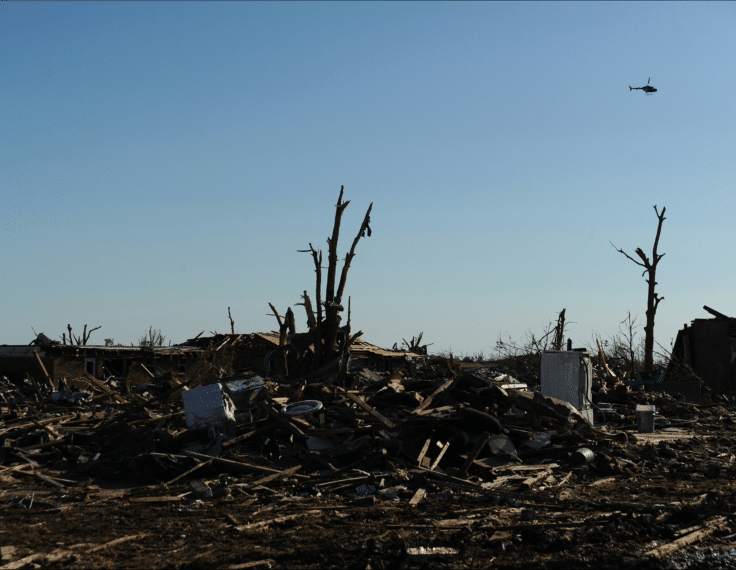
Amplifying the storm: Climate disinformation dynamics during natural disasters on right-wing extremist Telegram channels
Diego DiMattina, André Sobral and David Nemer
Climate change amplifies natural disasters, posing an existential threat to our society. However, a digital storm is raging on right-wing extremist Telegram channels where climate disinformation works to delegitimize scientific consensus. Investigating the factors that amplify climate disinformation is as critical to combating it as understanding natural disasters and their drivers. We
Fact-Checking
Fact-checking at a crossroads: Fact checkers’ perspectives on Community Notes, AI integration, and design recommendations
Basak Bozkurt, Mohsen Mosleh and Helen Margetts
Social media platforms are increasingly using community-based verification systems, such as Community Notes, and AI systems to flag and contextualize potentially misleading content at scale. While these approaches promise speed and broad coverage, concerns about accuracy, bias, and transparency persist. Drawing on interviews with 29 fact checkers, we find that practitioners see community-based verification and AI Note Writers as complementary tools that can support, but not replace, professional fact-checking.

When knowing more means doing less: Algorithmic knowledge and digital (dis)engagement among young adults
Myojung Chung
What if knowing how social media algorithms work doesn’t make you a more responsible digital citizen, but a more cynical one? A new survey of U.S. young adults finds that while higher algorithmic awareness and knowledge are linked to greater concerns about misinformation and filter bubbles, individuals with greater algorithmic awareness and knowledge are less likely to correct misinformation or engage with opposing viewpoints on social media—possibly reflecting limited algorithmic agency.

Feedback and education improve human detection of image manipulation on social media
Adnan Hoq, Matthew J. Facciani and Tim Weninger
This study investigates the impact of educational interventions and feedback on users’ ability to detect manipulated images on social media, addressing a gap in research that has primarily focused on algorithmic approaches. Through a pre-registered randomized and controlled experiment, we found that feedback and educational content significantly improved participants’ ability to detect manipulated images on social media.

How spammers and scammers leverage AI-generated images on Facebook for audience growth
Renée DiResta and Josh A. Goldstein
Much of the research and discourse on risks from artificial intelligence (AI) image generators, such as DALL-E and Midjourney, has centered around whether they could be used to inject false information into political discourse. We show that spammers and scammers—seemingly motivated by profit or clout, not ideology—are already using AI-generated images to gain significant traction on Facebook.
How do social media users and journalists express concerns about social media misinformation? A computational analysis
Jianing Li and Michael W. Wagner
This article describes partisan-based, accuracy-based, and action-based discussions through which U.S. social media users and journalists express concerns about social media misinformation. While platform policy stands out as the most highly discussed topic by both social media users and journalists, much of it is cast through a party politics lens.

Who reports witnessing and performing corrections on social media in the United States, United Kingdom, Canada, and France?
Rongwei Tang, Emily K. Vraga, Leticia Bode and Shelley Boulianne
Observed corrections of misinformation on social media can encourage more accurate beliefs, but for these benefits to occur, corrections must happen. By exploring people’s perceptions of witnessing and performing corrections on social media, we find that many people say they observe and perform corrections across the United States, the United Kingdom, Canada, and France.
Journalistic interventions matter: Understanding how Americans perceive fact-checking labels
Chenyan Jia and Taeyoung Lee
While algorithms and crowdsourcing have been increasingly used to debunk or label misinformation on social media, such tasks might be most effective when performed by professional fact checkers or journalists. Drawing on a national survey (N = 1,003), we found that U.S. adults evaluated fact-checking labels created by professional fact checkers as more effective than labels by algorithms and other users. News