
Explore All Articles
All Articles
Article Topic

Hide and seek: The connection between false beliefs and perceptions of government transparency
Mathieu Lavigne, Éric Bélanger, Richard Nadeau, Jean-François Daoust and Erick Lachapelle
This research examines how false beliefs shape perceptions of government transparency in times of crisis. Measuring transparency perceptions using both closed- and open-ended questions drawn from a Canadian panel survey, we show that individuals holding false beliefs about COVID-19 are more likely to have negative perceptions of government transparency.
Elections
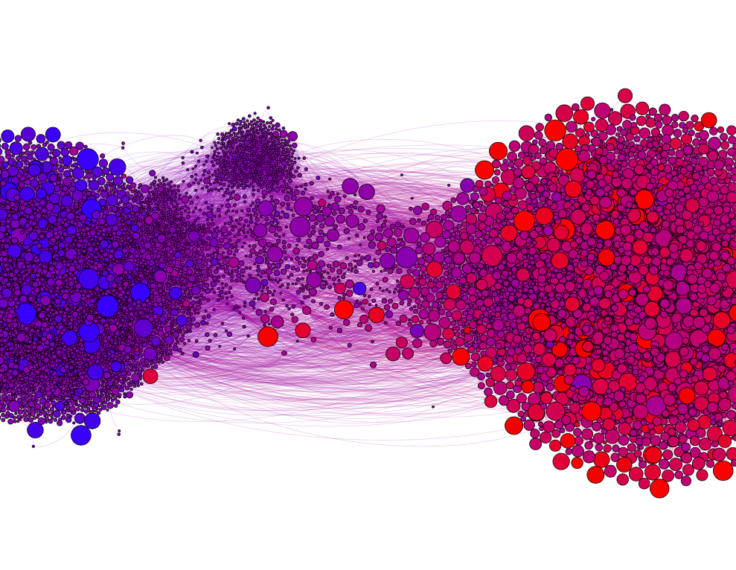
Right and left, partisanship predicts (asymmetric) vulnerability to misinformation
Dimitar Nikolov, Alessandro Flammini and Filippo Menczer
We analyze the relationship between partisanship, echo chambers, and vulnerability to online misinformation by studying news sharing behavior on Twitter. While our results confirm prior findings that online misinformation sharing is strongly correlated with right-leaning partisanship, we also uncover a similar, though weaker, trend among left-leaning users.
Research note: The spread of political misinformation on online subcultural platforms
Anthony G. Burton and Dimitri Koehorst
This research note explores the extent to which misinformation and other types of “junk” content are spread on political boards and forums on 4chan and Reddit. Our findings suggest that these userbases are impervious to the appeal of low-quality “pink slime” news sites with algorithmically generated conservative talking points masquerading as journalism.

COVID-19
The spread of COVID-19 conspiracy theories on social media and the effect of content moderation
Orestis Papakyriakopoulos, Juan Carlos Medina Serrano and Simon Hegelich
We investigate the diffusion of conspiracy theories related to the origin of COVID-19 on social media. By analyzing third-party content on four social media platforms, we show that: (a) In contrast to conventional wisdom, mainstream sources contribute overall more to conspiracy theories diffusion than alternative and other sources; and (b) platforms’ content moderation practices are able to mitigate the spread of conspiracy theories.
Misinformation in action: Fake news exposure is linked to lower trust in media, higher trust in government when your side is in power
Katherine Ognyanova, David Lazer, Ronald E. Robertson and Christo Wilson
One major concern about fake news is that it could damage the public trust in democratic institutions. We examined this possibility using longitudinal survey data combined with records of online behavior. Our study found that online misinformation was linked to lower trust in mainstream media across party lines.