
Explore All Articles
All Articles
Article Topic

Review of social science research on the impact of countermeasures against influence operations
Laura Courchesne, Julia Ilhardt and Jacob N. Shapiro
Despite ongoing discussion of the need for increased regulation and oversight of social media, as well as debate over the extent to which the platforms themselves should be responsible for containing misinformation, there is little consensus on which interventions work to address the problem of influence operations and disinformation campaigns.
Critical disinformation studies: History, power, and politics
Rachel Kuo and Alice Marwick
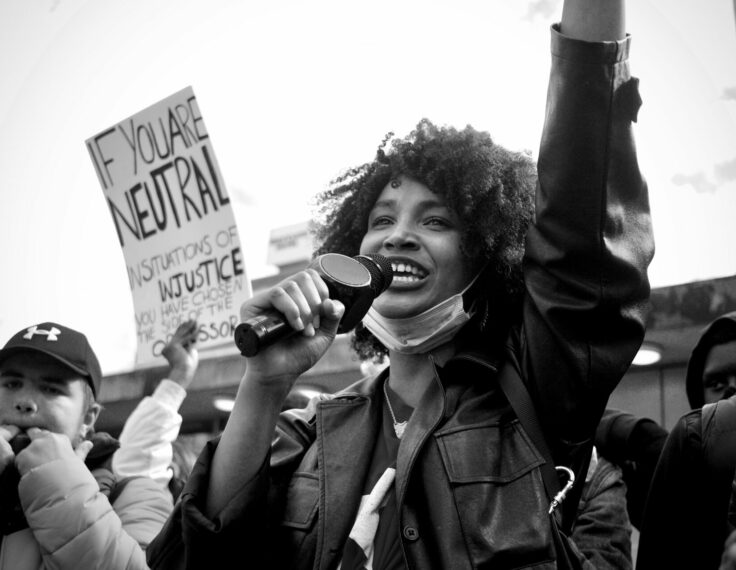
This essay advocates a critical approach to disinformation research that is grounded in history, culture, and politics, and centers questions of power and inequality. In the United States, identity, particularly race, plays a key role in the messages and strategies of disinformation producers and who disinformation and misinformation resonates with.
Self-regulation 2:0? A critical reflection of the European fight against disinformation
Ethan Shattock
In presenting the European Democracy Action Plan (EDAP) in 2020, the European Commission pledged to build more resilient democracies across the EU. As part of this plan, the Commission announced intensified measures to combat disinformation, both through the incoming Digital Services Act (DSA) and specific measures to address sponsored content online.
Elections
Source alerts can reduce the harms of foreign disinformation
Jason Ross Arnold, Alexandra Reckendorf and Amanda L. Wintersieck
Social media companies have begun to use content-based alerts in their efforts to combat mis- and disinformation, including fact-check corrections and warnings of possible falsity, such as “This claim about election fraud is disputed.” Another harm reduction tool, source alerts, can be effective when a hidden foreign hand is known or suspected.
Propaganda
Unseeing propaganda: How communication scholars learned to love commercial media
Victor Pickard
A new disinformation age is upon us—or so it seems. But much of what appears to be unprecedented isn’t new at all. Concerns about misinformation’s effects on democracy are as old as media. The many systemic failures abetting Trump’s ascendance—as well as more recent election- and pandemic-related conspiracies—were decades in the making.

Elections
COVID-19 disinformation and political engagement among communities of color: The role of media literacy
Erica Weintraub Austin, Porismita Borah and Shawn Domgaard
Communities of color, suffering equity gaps and disproportionate COVID-19 effects, also must resist ongoing disinformation campaigns designed to impede their political influence. A representative, national survey (N=1264) of adults conducted June-July 2020 found that nonwhite respondents tended to report less COVID-19 knowledge, media literacy, and voting intent than white respondents, but more acceptance of COVID-19 disinformation and for risks associated with protesting for social justice.

Research note: Bolsonaro’s firehose: How Covid-19 disinformation on WhatsApp was used to fight a government political crisis in Brazil
Felipe Bonow Soares, Raquel Recuero, Taiane Volcan, Giane Fagundes and Giéle Sodré
Brazil has one of the highest rates of cases and deaths attributed to Covid-19 in the world. Two factors contributed to the high rates: the Brazilian government underestimated the pandemic and a large amount of disinformation was spread through social media.
Elections
Retracted: Disinformation creep: ADOS and the strategic weaponization of breaking news
Mutale Nkonde, Maria Y. Rodriguez, Leonard Cortana, Joan K. Mukogosi, Shakira King, Ray Serrato, Natalie Martinez, Mary Drummer, Ann Lewis and Momin M. Malik
In this essay, we conduct a descriptive content analysis from a sample of a dataset made up of 534 thousand scraped tweets, supplemented with access to 1.36 million tweets from the Twitter firehose, from accounts that used the #ADOS hashtag between November 2019 and September 2020.
Breaking Harmony Square: A game that “inoculates” against political misinformation
Jon Roozenbeek and Sander van der Linden
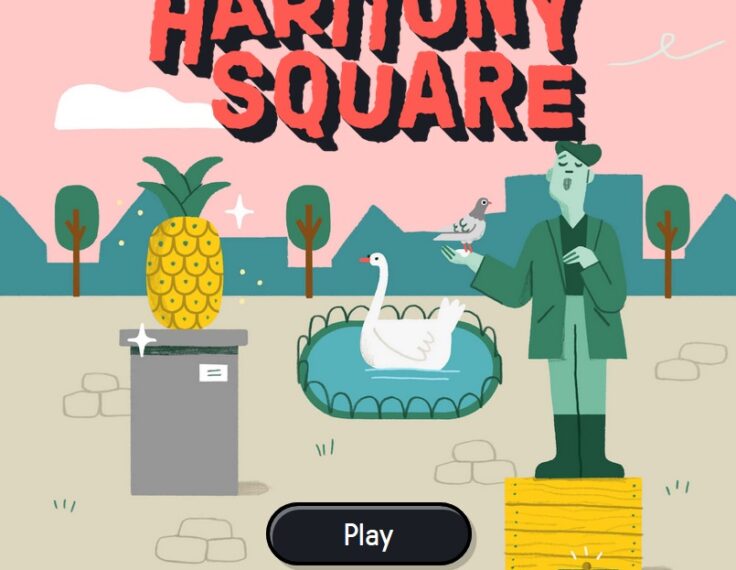
We present Harmony Square, a short, free-to-play online game in which players learn how political misinformation is produced and spread. We find that the game confers psychological resistance against manipulation techniques commonly used in political misinformation: players from around the world find social media content making use of these techniques significantly less reliable after playing, are more confident in their ability to spot such content, and less likely to report sharing it with others in their network.