
Explore All Articles

All Articles
Article Topic

The anatomy of credulity and incredulity: A hermeneutics of misinformation
Carolyn N. Biltoft
This essay explores the historical process by which the birth and expansion of information systems transformed the relationship between “faith” and “fact.” The existence of recurring forms of credulity and conversely denial—from holocaust denial to climate change denial—suggests that patterns of belief and disbelief will not be easily resolved either with fact-checking or with the regulation of the press.

COVID-19
Why do people believe COVID-19 conspiracy theories?
Joseph E. Uscinski, Adam M. Enders, Casey Klofstad, Michelle Seelig, John Funchion, Caleb Everett, Stefan Wuchty, Kamal Premaratne and Manohar Murthi
As conspiracy theories about COVID-19 take root in the United States, understanding the psychological foundations of conspiracy beliefs is increasingly critical. Our research shows that beliefs in two popular variants of COVID-19 conspiracy theory are the joint product of the psychological predispositions 1) to reject information coming from experts and other authority figures and 2) to view major events as the product of conspiracies, as well as partisan and ideological motivations.

COVID-19
The relation between media consumption and misinformation at the outset of the SARS-CoV-2 pandemic in the US
Kathleen Hall Jamieson and Dolores Albarracín
A US national probability-based survey during the early days of the SARS-CoV-2 spread in the US showed that, above and beyond respondents’ political party, mainstream broadcast media use (e.g., NBC News) correlated with accurate information about the disease’s lethality, and mainstream print media use (e.g.,

Engaging with others: How the IRA coordinated information operation made friends
Darren L. Linvill and Patrick L. Warren
We analyzed the Russian Internet Research Agency’s (IRA) 2015–2017 English-language information operation on Twitter to understand the special role that engagement with outsiders (i.e., non-IRA affiliated accounts) played in their campaign. By analyzing the timing and type of engagement of IRA accounts with non-IRA affiliated accounts, and the characteristics of the latter, we identified a three-phases life cycle of such engagement, which was central to how this IRA network operated.

Misleading tobacco content is on the rise on YouTube
Daniel Romer, Zachary Reese and Patrick E. Jamieson
A content analysis of popular videos on YouTube containing tobacco-relevant material revealed five categories of misleading content about tobacco use in 2013. A re-examination in 2019 of the most heavily viewed exemplars of these categories identified in 2013 revealed a striking increase in viewership in all categories but especially in the portrayal and promotion of vaping.

Pausing to consider why a headline is true or false can help reduce the sharing of false news
Lisa Fazio
In an online experiment, participants who paused to explain why a headline was true or false indicated that they were less likely to share false information compared to control participants. Their intention to share accurate news stories was unchanged. These results indicate that adding “friction” (i.e.,
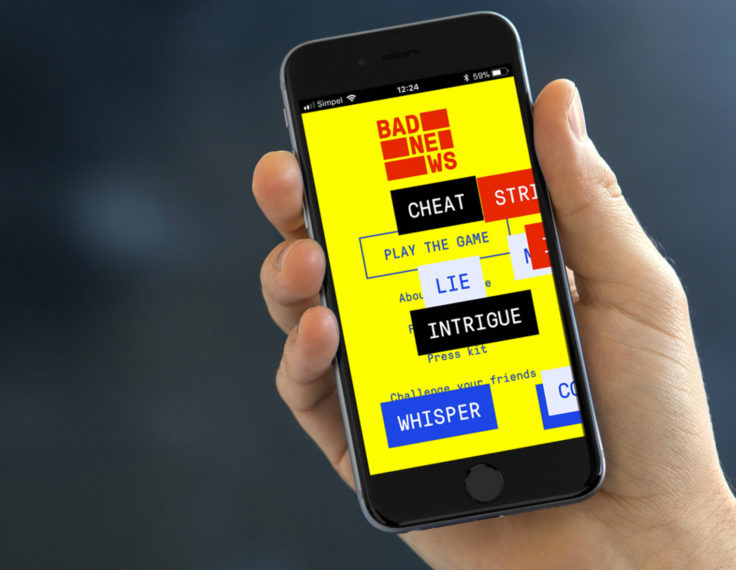
Prebunking interventions based on “inoculation” theory can reduce susceptibility to misinformation across cultures
Jon Roozenbeek, Sander van der Linden and Thomas Nygren
This study finds that the online “fake news” game, Bad News, can confer psychological resistance against common online misinformation strategies across different cultures. The intervention draws on the theory of psychological inoculation: Analogous to the process of medical immunization, we find that “prebunking,” or preemptively warning and exposing people to weakened doses of misinformation, can help cultivate “mental antibodies” against fake news.
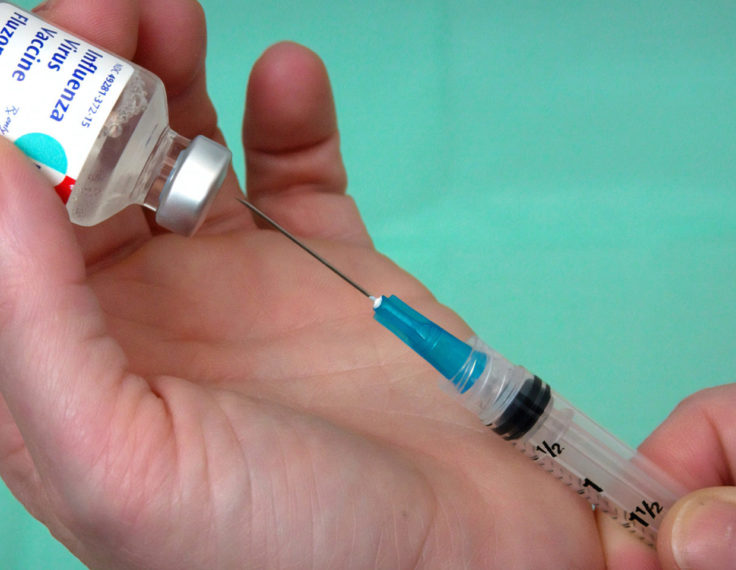
How trust in experts and media use affect acceptance of common anti-vaccination claims
Dominik Andrzej Stecula, Ozan Kuru and Kathleen Hall Jamieson
Surveys of nearly 2,500 Americans, conducted during a measles outbreak, suggest that users of traditional media are less likely to be misinformed about vaccines than social media users. Results also suggest that an individual’s level of trust in medical experts affects the likelihood that a person’s beliefs about vaccination will change.

Cross-platform disinformation campaigns: Lessons learned and next steps
Tom Wilson and Kate Starbird
We conducted a mixed-method, interpretative analysis of an online, cross-platform disinformation campaign targeting the White Helmets, a rescue group operating in rebel-held areas of Syria that have become the subject of a persistent effort of delegitimization. This research helps to conceptualize what a disinformation campaign is and how it works.
Russian Twitter disinformation campaigns reach across the American political spectrum
Deen Freelon and Tetyana Lokot
Evidence from an analysis of Twitter data reveals that Russian social media trolls exploited racial and political identities to infiltrate distinct groups of authentic users, playing on their group identities. The groups affected spanned the ideological spectrum, suggesting the importance of coordinated counter-responses from diverse coalitions of users.