
Explore All Articles
All Articles
Article Topic
Elections
Right and left, partisanship predicts (asymmetric) vulnerability to misinformation
Dimitar Nikolov, Alessandro Flammini and Filippo Menczer
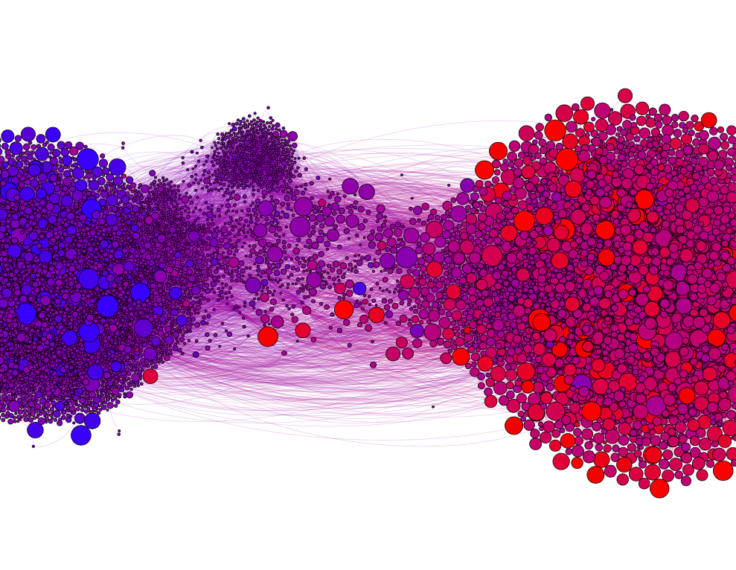
We analyze the relationship between partisanship, echo chambers, and vulnerability to online misinformation by studying news sharing behavior on Twitter. While our results confirm prior findings that online misinformation sharing is strongly correlated with right-leaning partisanship, we also uncover a similar, though weaker, trend among left-leaning users.
Elections
Retracted: Disinformation creep: ADOS and the strategic weaponization of breaking news
Mutale Nkonde, Maria Y. Rodriguez, Leonard Cortana, Joan K. Mukogosi, Shakira King, Ray Serrato, Natalie Martinez, Mary Drummer, Ann Lewis and Momin M. Malik
In this essay, we conduct a descriptive content analysis from a sample of a dataset made up of 534 thousand scraped tweets, supplemented with access to 1.36 million tweets from the Twitter firehose, from accounts that used the #ADOS hashtag between November 2019 and September 2020.

Tackling misinformation: What researchers could do with social media data
HKS Misinformation Review Guest Authors
Written by Irene V. Pasquetto, Briony Swire-Thompson, Michelle A. Amazeen, Fabrício Benevenuto, Nadia M. Brashier, Robert M. Bond, Lia C. Bozarth, Ceren Budak, Ullrich K. H. Ecker, Lisa K. Fazio, Emilio Ferrara, Andrew J. Flanagin, Alessandro Flammini, Deen Freelon, Nir Grinberg, Ralph Hertwig, Kathleen Hall Jamieson, Kenneth Joseph, Jason J.
COVID-19
The Twitter origins and evolution of the COVID-19 “plandemic” conspiracy theory
Matthew D. Kearney, Shawn C. Chiang and Philip M. Massey
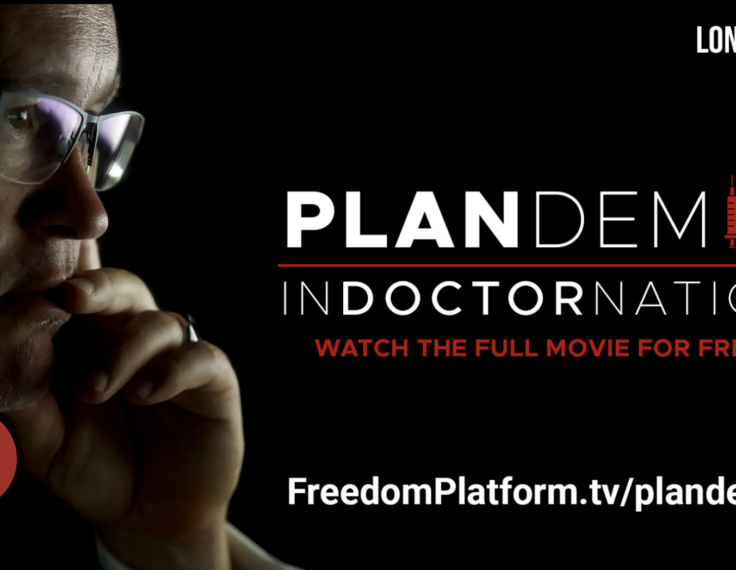
Tweets about “plandemic” (e.g., #plandemic)—the notion that the COVID-19 pandemic was planned or fraudulent—helped to spread several distinct conspiracy theories related to COVID-19. But the term’s catchy nature attracted attention from anti-vaccine activist filmmakers who ultimately created Plandemic the 26-minute documentary.
COVID-19
Not just conspiracy theories: Vaccine opponents and proponents add to the COVID-19 ‘infodemic’ on Twitter
Amelia M. Jamison, David A. Broniatowski, Mark Dredze, Anu Sangraula, Michael C. Smith and Sandra C. Quinn
In February 2020, the World Health Organization announced an ‘infodemic’—a deluge of both accurate and inaccurate health information—that accompanied the global pandemic of COVID-19 as a major challenge to effective health communication. We assessed content from the most active vaccine accounts on Twitter to understand how existing online communities contributed to the ‘infodemic’ during the early stages of the pandemic.
COVID-19
Misinformation more likely to use non-specific authority references: Twitter analysis of two COVID-19 myths
Joseph McGlynn, Maxim Baryshevtsev and Zane A. Dayton
This research examines the content, timing, and spread of COVID-19 misinformation and subsequent debunking efforts for two COVID-19 myths. COVID-19 misinformation tweets included more non-specific authority references (e.g., “Taiwanese experts”, “a doctor friend”), while debunking tweets included more specific and verifiable authority references (e.g.,
COVID-19
Ibuprofen narratives in five European countries during the COVID-19 pandemic
Sergi Xaudiera and Ana S. Cardenal
We follow the trajectory of the unverified story about the adverse effects of using Ibuprofen for treating the Coronavirus disease 2019 (COVID-19) on Twitter, across five European countries. Our findings suggest that the impact of misinformation1We use the term misinformation to refer to false or inaccurate information that is shared accidentally.
COVID-19
The causes and consequences of COVID-19 misperceptions: Understanding the role of news and social media
Aengus Bridgman, Eric Merkley, Peter John Loewen, Taylor Owen, Derek Ruths, Lisa Teichmann and Oleg Zhilin
We investigate the relationship between media consumption, misinformation, and important attitudes and behaviours during the coronavirus disease 2019 (COVID-19) pandemic. We find that comparatively more misinformation circulates on Twitter, while news media tends to reinforce public health recommendations like social distancing. We find that exposure to social media is associated with misperceptions regarding basic facts about COVID-19 while the inverse is true for news media.

Do the right thing: Tone may not affect correction of misinformation on social media
Leticia Bode, Emily K. Vraga and Melissa Tully
An experiment conducted with 610 participants suggests that corrections to misinformation—pointing out information that is wrong or misleading and offering credible information in its place—on social media reduce misperceptions regardless of the correction’s tone (uncivil, affirmational, or neutral). There is also an opportunity to correct secondary but related misperceptions (dealing with the same topic but with a different specific fact) when responding to misinformation on social media.