Explore All Articles
All Articles
Article Topic
COVID-19
The spread of COVID-19 conspiracy theories on social media and the effect of content moderation
Orestis Papakyriakopoulos, Juan Carlos Medina Serrano and Simon Hegelich
We investigate the diffusion of conspiracy theories related to the origin of COVID-19 on social media. By analyzing third-party content on four social media platforms, we show that: (a) In contrast to conventional wisdom, mainstream sources contribute overall more to conspiracy theories diffusion than alternative and other sources; and (b) platforms’ content moderation practices are able to mitigate the spread of conspiracy theories.
Exposure to social engagement metrics increases vulnerability to misinformation
Mihai Avram, Nicholas Micallef, Sameer Patil and Filippo Menczer
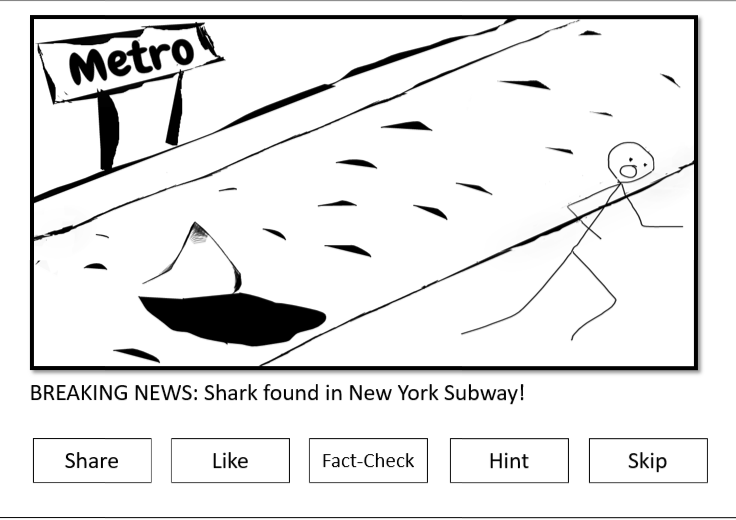
News feeds in virtually all social media platforms include engagement metrics, such as the number of times each post is liked and shared. We find that exposure to these signals increases the vulnerability of users to low-credibility information in a simulated social media feed.
COVID-19
Meme factory cultures and content pivoting in Singapore and Malaysia during COVID-19
Crystal Abidin
This paper is a qualitative ethnographic study of how a group of meme factories in Singapore and Malaysia have adapted their content programming and social media practices in light of COVID-19. It considers how they have fostered, countered, or challenged the rise and spread of misinformation in both countries.

COVID-19
The causes and consequences of COVID-19 misperceptions: Understanding the role of news and social media
Aengus Bridgman, Eric Merkley, Peter John Loewen, Taylor Owen, Derek Ruths, Lisa Teichmann and Oleg Zhilin
We investigate the relationship between media consumption, misinformation, and important attitudes and behaviours during the coronavirus disease 2019 (COVID-19) pandemic. We find that comparatively more misinformation circulates on Twitter, while news media tends to reinforce public health recommendations like social distancing. We find that exposure to social media is associated with misperceptions regarding basic facts about COVID-19 while the inverse is true for news media.

Do the right thing: Tone may not affect correction of misinformation on social media
Leticia Bode, Emily K. Vraga and Melissa Tully
An experiment conducted with 610 participants suggests that corrections to misinformation—pointing out information that is wrong or misleading and offering credible information in its place—on social media reduce misperceptions regardless of the correction’s tone (uncivil, affirmational, or neutral). There is also an opportunity to correct secondary but related misperceptions (dealing with the same topic but with a different specific fact) when responding to misinformation on social media.

COVID-19
Pandemics & propaganda: How Chinese state media creates and propagates CCP coronavirus narratives
Vanessa Molter and Renee DiResta
To gain insight into how Chinese state media is communicating about the coronavirus pandemic to the outside world, we analyzed a collection of posts from their English-language presence on Facebook. We observed three recurring behaviors: sharing positive stories and promoting the Chinese Communist Party’s (CCP) pandemic response, rewriting recent history in a manner favorable to the CCP as the coronavirus pandemic evolved, and using targeted ads to spread preferred messages.
COVID-19
Leveraging volunteer fact checking to identify misinformation about COVID-19 in social media
Hyunuk Kim and Dylan Walker
Identifying emerging health misinformation is a challenge because its manner and type are often unknown. However, many social media users correct misinformation when they encounter it. From this intuition, we implemented a strategy that detects emerging health misinformation by tracking replies that seem to provide accurate information.

COVID-19
Signs of a new world order: Italy as the COVID-19 disinformation battlefield
Costanza Sciubba Caniglia
When Italy became the western center of the COVID-19 outbreak, it also became the focus of a series of states-sponsored coordinated disinformation campaigns. From early March through May 2020, disinformation operations in the country have increased noticeably, showing evidence of evolving strategies from multiple state actors geared towards reshaping the narrative of the global COVID-19 crisis and pushing forward geopolitical interests.

COVID-19
How search engines disseminate information about COVID-19 and why they should do better
Mykola Makhortykh, Aleksandra Urman and Roberto Ulloa
Access to accurate and up-to-date information is essential for individual and collective decision making, especially at times of emergency. On February 26, 2020, two weeks before the World Health Organization (WHO) officially declared the COVID-19’s emergency a “pandemic,” we systematically collected and analyzed search results for the term “coronavirus” in three languages from six search engines. We