
Explore All Articles
All Articles
Article Topic
Elections
Source alerts can reduce the harms of foreign disinformation
Jason Ross Arnold, Alexandra Reckendorf and Amanda L. Wintersieck
Social media companies have begun to use content-based alerts in their efforts to combat mis- and disinformation, including fact-check corrections and warnings of possible falsity, such as “This claim about election fraud is disputed.” Another harm reduction tool, source alerts, can be effective when a hidden foreign hand is known or suspected.
How COVID drove the evolution of fact-checking
Samikshya Siwakoti, Kamya Yadav, Nicola Bariletto, Luca Zanotti, Ulas Erdogdu and Jacob N. Shapiro
With the outbreak of the coronavirus pandemic came a flood of novel misinformation. Ranging from harmless false cures to dangerous rhetoric targeting minorities, coronavirus-related misinformation spread quickly wherever the virus itself did. Fact-checking organizations around the world took up the charge against misinformation, essentially crowdsourcing the task of debunking false narratives.
Research note: Likes, sarcasm and politics: Youth responses to a platform-initiated media literacy campaign on social media
Ioana Literat, Abubakr Abdelbagi, Nicola YL Law, Marcus Y-Y Cheung and Rongwei Tang
To better understand youth attitudes towards media literacy education on social media, and the opportunities and challenges inherent in such initiatives, we conducted a large-scale analysis of user responses to a recent media literacy campaign on TikTok. We found that reactions to the campaign were mixed, and highly political in nature.
Elections
Right and left, partisanship predicts (asymmetric) vulnerability to misinformation
Dimitar Nikolov, Alessandro Flammini and Filippo Menczer
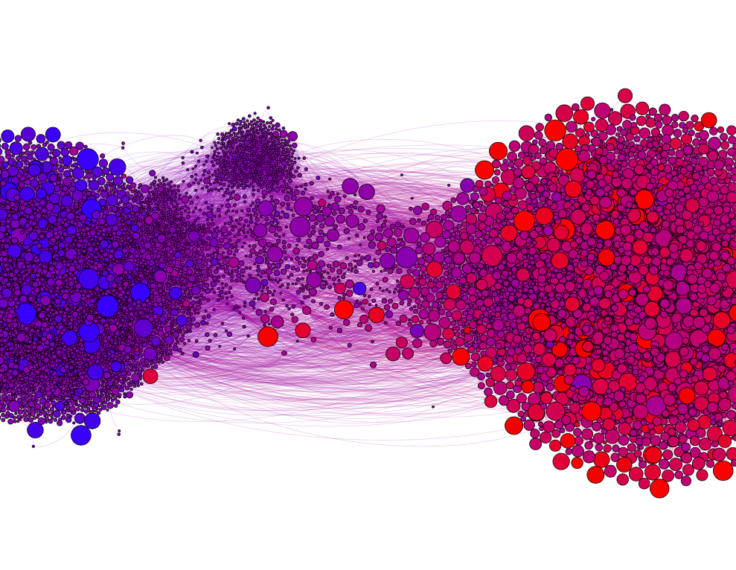
We analyze the relationship between partisanship, echo chambers, and vulnerability to online misinformation by studying news sharing behavior on Twitter. While our results confirm prior findings that online misinformation sharing is strongly correlated with right-leaning partisanship, we also uncover a similar, though weaker, trend among left-leaning users.

The presence of unexpected biases in online fact-checking
Sungkyu Park, Jaimie Yejean Park, Jeong-han Kang and Meeyoung Cha
The increasing amount of information online makes it challenging to judge what to believe or discredit. Fact-checking unverified claims shared on platforms, like social media, can play a critical role in correcting misbeliefs. The current study demonstrates how the effect of fact-checking can vary by several factors.

Conspiracy and debunking narratives about COVID-19 origins on Chinese social media: How it started and who is to blame
Kaiping Chen, Anfan Chen, Jingwen Zhang, Jingbo Meng and Cuihua Shen
This paper studies conspiracy and debunking narratives about the origins of COVID-19 on a major Chinese social media platform, Weibo, from January to April 2020. Popular conspiracies about COVID-19 on Weibo, including that the virus is human-synthesized or a bioweapon, differ substantially from those in the United States.

Tackling misinformation: What researchers could do with social media data
HKS Misinformation Review Guest Authors
Written by Irene V. Pasquetto, Briony Swire-Thompson, Michelle A. Amazeen, Fabrício Benevenuto, Nadia M. Brashier, Robert M. Bond, Lia C. Bozarth, Ceren Budak, Ullrich K. H. Ecker, Lisa K. Fazio, Emilio Ferrara, Andrew J. Flanagin, Alessandro Flammini, Deen Freelon, Nir Grinberg, Ralph Hertwig, Kathleen Hall Jamieson, Kenneth Joseph, Jason J.

Breaking Harmony Square: A game that “inoculates” against political misinformation
Jon Roozenbeek and Sander van der Linden
We present Harmony Square, a short, free-to-play online game in which players learn how political misinformation is produced and spread. We find that the game confers psychological resistance against manipulation techniques commonly used in political misinformation: players from around the world find social media content making use of these techniques significantly less reliable after playing, are more confident in their ability to spot such content, and less likely to report sharing it with others in their network.
Research note: Does the public support fact-checking social media? It depends whom and how you ask
Timothy S. Rich, Ian Milden and Mallory Treece Wagner
We analyze original survey data on support for social media companies’ fact-checking of politicians in general and President Trump in particular. We find overwhelming majorities of Democrats support fact-checking in both instances, while a majority of Republicans support fact-checking of politicians in general but not of President Trump.