
Explore All Articles
All Articles
Article Topic
Where conspiracy theories flourish: A study of YouTube comments and Bill Gates conspiracy theories
Lan Ha, Timothy Graham and Joanne Gray
We studied YouTube comments posted to Covid-19 news videos featuring Bill Gates and found they were dominated by conspiracy theories. Our results suggest the platform’s comments feature operates as a relatively unmoderated social media space where conspiracy theories circulate unchecked. We outline steps that YouTube can take now to improve its approach to moderating misinformation.

Community-based strategies for combating misinformation: Learning from a popular culture fandom
Jin Ha Lee, Nicole Santero, Arpita Bhattacharya, Emma May and Emma S. Spiro
Through the lens of one of the fastest-growing international fandoms, this study explores everyday misinformation in the context of networked online environments. Findings show that fans experience a range of misinformation, similar to what we see in other political, health, or crisis contexts.
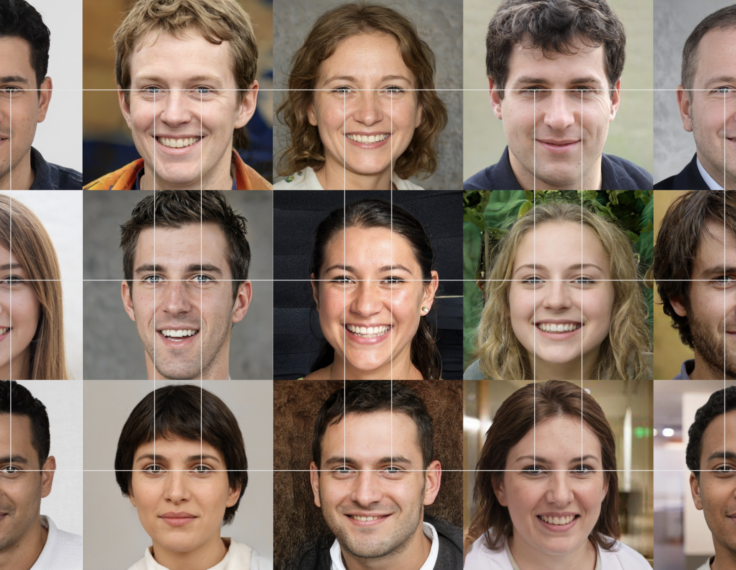
Research note: This salesperson does not exist: How tactics from political influence operations on social media are deployed for commercial lead generation
Josh A. Goldstein and Renée DiResta
Researchers of foreign and domestic influence operations document tactics that frequently recur in covert propaganda campaigns on social media, including backstopping fake personas with plausible biographies or histories, using GAN-generated images as profile photos, and outsourcing account management to paid organizations.

Cognitive reflection is associated with greater truth discernment for COVID-19 headlines, less trust but greater use of formal information sources, and greater willingness to pay for masks among social media users in Pakistan
Ayesha Ali and Ihsan Ayyub Qazi
We evaluated the relationship between individual differences in cognitive reflection and the ability to discern between true and false COVID-19 information, trust in information sources for receiving COVID-19 information and willingness to pay (WTP) for masks, using a sample of 621 low- and middle-income users in Pakistan.

Measuring the effect of Facebook’s downranking interventions against groups and websites that repeatedly share misinformation
Emmanuel M. Vincent, Héloïse Théro and Shaden Shabayek
Facebook has claimed to fight misinformation notably by reducing the virality of posts shared by “repeat offender” websites. The platform recently extended this policy to groups. We identified websites and groups that repeatedly publish false information according to fact checkers and investigated the implementation and impact of Facebook’s measures against them.

Leveraging infodemiologists to counteract online misinformation: Experience with COVID-19 vaccines
Jack M. Gorman and David A. Scales
In the new information environment represented by the internet and social media platforms, information of public health importance is transmitted rapidly by decentralized, interpersonal networks rather than through traditional sources like public health officials or professional journalists, thus requiring a new approach to counteracting misinformation.

Chinese state media Facebook ads are linked to changes in news coverage of China worldwide
Arjun M. Tambe and Toni Friedman
We studied the relationship between Facebook advertisements from Chinese state media on the global media environment by examining the link between advertisements and online news coverage of China by other countries. We found that countries that see a large increase in views of Facebook advertisement from Chinese state media also see news coverage of China become more positive.

Research note: Examining how various social media platforms have responded to COVID-19 misinformation
Nandita Krishnan, Jiayan Gu, Rebekah Tromble and Lorien C. Abroms
We analyzed community guidelines and official news releases and blog posts from 12 leading social media and messaging platforms (SMPs) to examine their responses to COVID-19 misinformation. While the majority of platforms stated that they prohibited COVID-19 misinformation, the responses of many platforms lacked clarity and transparency.
Digital literacy is associated with more discerning accuracy judgments but not sharing intentions
Nathaniel Sirlin, Ziv Epstein, Antonio A. Arechar and David G. Rand
It has been widely argued that social media users with low digital literacy—who lack fluency with basic technological concepts related to the internet—are more likely to fall for online misinformation, but surprisingly little research has examined this association empirically. In a large survey experiment involving true and false news posts about politics and COVID-19, we found that digital literacy is indeed an important predictor of the ability to tell truth from falsehood when judging headline accuracy.