
Explore All Articles
All Articles
Article Topic
Propaganda
Unseeing propaganda: How communication scholars learned to love commercial media
Victor Pickard
A new disinformation age is upon us—or so it seems. But much of what appears to be unprecedented isn’t new at all. Concerns about misinformation’s effects on democracy are as old as media. The many systemic failures abetting Trump’s ascendance—as well as more recent election- and pandemic-related conspiracies—were decades in the making.

Propaganda
Propaganda, misinformation, and histories of media techniques
C. W. Anderson
This essay argues that the recent scholarship on misinformation and fake news suffers from a lack of historical contextualization. The fact that misinformation scholarship has, by and large, failed to engage with the history of propaganda and with how propaganda has been studied by media and communication researchers is an empirical detriment to it, and serves to make the solutions and remedies to misinformation harder to articulate because the actual problem they are trying to solve is unclear.
Propaganda
Data dependencies and funding prospects: A 1930s cautionary tale
Jefferson Pooley
Misinformation studies relies, to some extent, on access to data from large technology firms, which also seed grants, sponsor events, and support think tanks working in the field. These companies, facing scrutiny from regulators and critics, have a stake in their portrayal.

Propaganda
Overlooking the political economy in the research on propaganda
Aman Abhishek
Historically, scholars studying propaganda have focused on its psychological and behavioral impacts on audiences. This tradition has roots in the unique historical trajectory of the United States through the 20th century. This article argues that this tradition is quite inadequate to tackle propaganda-related issues in the Global South, where a deep understanding of the political economy of propaganda and misinformation is urgently needed.
COVID-19
The spread of COVID-19 conspiracy theories on social media and the effect of content moderation
Orestis Papakyriakopoulos, Juan Carlos Medina Serrano and Simon Hegelich
We investigate the diffusion of conspiracy theories related to the origin of COVID-19 on social media. By analyzing third-party content on four social media platforms, we show that: (a) In contrast to conventional wisdom, mainstream sources contribute overall more to conspiracy theories diffusion than alternative and other sources; and (b) platforms’ content moderation practices are able to mitigate the spread of conspiracy theories.

COVID-19
The causes and consequences of COVID-19 misperceptions: Understanding the role of news and social media
Aengus Bridgman, Eric Merkley, Peter John Loewen, Taylor Owen, Derek Ruths, Lisa Teichmann and Oleg Zhilin
We investigate the relationship between media consumption, misinformation, and important attitudes and behaviours during the coronavirus disease 2019 (COVID-19) pandemic. We find that comparatively more misinformation circulates on Twitter, while news media tends to reinforce public health recommendations like social distancing. We find that exposure to social media is associated with misperceptions regarding basic facts about COVID-19 while the inverse is true for news media.
Misinformation in action: Fake news exposure is linked to lower trust in media, higher trust in government when your side is in power
Katherine Ognyanova, David Lazer, Ronald E. Robertson and Christo Wilson
One major concern about fake news is that it could damage the public trust in democratic institutions. We examined this possibility using longitudinal survey data combined with records of online behavior. Our study found that online misinformation was linked to lower trust in mainstream media across party lines.

COVID-19
The relation between media consumption and misinformation at the outset of the SARS-CoV-2 pandemic in the US
Kathleen Hall Jamieson and Dolores Albarracín
A US national probability-based survey during the early days of the SARS-CoV-2 spread in the US showed that, above and beyond respondents’ political party, mainstream broadcast media use (e.g., NBC News) correlated with accurate information about the disease’s lethality, and mainstream print media use (e.g.,
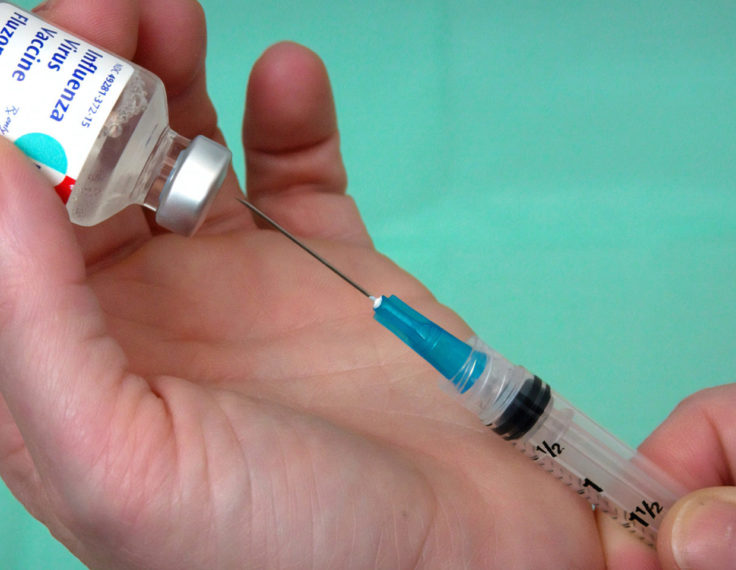
How trust in experts and media use affect acceptance of common anti-vaccination claims
Dominik Andrzej Stecula, Ozan Kuru and Kathleen Hall Jamieson
Surveys of nearly 2,500 Americans, conducted during a measles outbreak, suggest that users of traditional media are less likely to be misinformed about vaccines than social media users. Results also suggest that an individual’s level of trust in medical experts affects the likelihood that a person’s beliefs about vaccination will change.