
Peer Reviewed
Alternative science against the corrupt elites? The effects of pseudoscience and censorship accusations in health misinformation
Article Metrics

0
CrossRef Citations
PDF Downloads
Page Views
Due to extensive regulations, pseudoscience and accusations of censorship are increasingly used as persuasive strategies in health misinformation. How effective are these? This experiment examines the effects of pseudoscientific misinformation about COVID-19 vaccines and genetically modified organisms (GMOs) by accounting for the rhetoric of the “persecuted hero narrative” (Baker, 2022), which involves accusations of censorship against media, platforms, and governments. The effects were generally limited: pseudoscientific content increased the perceived credibility of misinformation and heightened risk perceptions. The censorship accusation reduced the credibility of misinformation. We discuss the implications for understanding and countering such sophisticated health misinformation.

Research Questions
- Do science-appropriating techniques (e.g., pseudostatistical content) shape (message) credibility assessments as well as risk perception and behavioral intentions toward vaccine and GMO misinformation?
- Do censorship accusations affect credibility assessments, risk perceptions, and behavioral intentions?
- Does subjective numeracy (one’s confidence about their numerical skills) condition one’s receptivity/vulnerability to pseudoscientific content?
- Does scientific populism (antagonism against scientists) condition one’s receptivity/vulnerability to censorship accusations?
Essay Summary
- Health misinformation increasingly incorporates scientifically looking details and accusations of censorship, yet little is known about how these features shape public responses.
- We conducted an experiment with N = 900 adult Singaporeans in 2024 using a (2 × 2 × 2) + 1 mixed-factorial design that crossed pseudoscientific content, censorship accusations, and topic (vaccine vs. GMOs), and had an unrelated control condition.
- Pseudoscientific content boosted the credibility of misinformation, increased GMO risk perceptions, and reduced use intentions, although the effects were small.
- Higher subjective numeracy increased vulnerability to pseudoscientific content, but this was contingent on the presence of censorship accusations.
- Among individuals high in scientific populism, pseudoscientific content combined with censorship accusations was associated with lower vaccination and GMO consumption intentions. However, not all of these interactive effects persisted in various robustness checks, so the findings on moderation by individual differences should be treated as provisional/suggestive evidence rather than conclusive.
Implications
Effects of pseudoscientific content
Misinformation that co-opts science could be particularly effective. Developments like preprint exposure and “I do my own research” movements (Chinn & Hasell, 2023; Vranic et al., 2022) increasingly normalize scientific-looking, unvetted information (Lee et al., 2021; Berg, 2025). Health blogs (e.g., on Substack) exploit this by circulating misleading “findings” based on unwarranted assumptions and statistical misrepresentations. Pseudoscience can involve fabricated statistics, misleading interpretations of real data, and substantive deviations from scientific procedures and norms (Hansson, 2025; Kuru, 2026a; Appendix A). In the near future, AI-generated hallucinated citations (i.e., non-existent research) may exacerbate pseudoscientific health misinformation (cf. Guo et al., 2025; Shao, 2025).
We focused on one specific form of pseudoscientific content within the broader domain of health misinformation. Health misinformation is conceptualized as a health-related claim based on anecdotal evidence or as a claim that is otherwise false or misleading because it lacks adequate scientific support (Suarez-Lledo & Alvarez-Galvez, 2021). Pseudoscience involves the imitation or appropriation of scientific features and can take multiple forms in the context of misinformation (Hansson, 2025; Kuru, 2026a).
We tested whether pseudoscientific content strengthens misinformation’s effects. Research shows that scientific details increase credibility (Fang, 2024; HŠmmerli et al., 2025; Jonas et al., 2024). Yet, misinformation research has relied on abstract constructs such as “scientific-sounding bullshit” (Evans et al., 2020, p. 401; Pennycook & Rand, 2020, p. 188) and less realistic examples, such as the fictional “Valza virus” (O’Brien et al., 2021). While these studies provide important evidence, pseudoscientific health misinformation can be conceptualized more realistically as an integrated rhetorical package that combines a formal tone, structured reasoning, and statistical claims that co-occur to simulate and project scientific legitimacy onto real issues.
Our manipulation operationalized these features as an integrated rhetorical package in which a false health claim employed a formal tone, structured reasoning, fabricated statistics, and a wrongful causal interpretation. Accordingly, the estimates identify the effect of exposure to this bundled treatment of pseudoscientific health misinformation. They do not represent the effects of other forms of pseudoscience (e.g., fake experts) or other forms of (non-pseudoscientific) health misinformation at large. They cannot identify the independent contribution of any single component of the rhetorical package.
We found that pseudoscience slightly increased believability, and behavioral impacts were limited and topic-specific, shifting risk perceptions and intentions only for the GMO issue. This suggests that while pseudoscience influences attitudinal evaluation, the behavioral repercussions are more conditional. Risk perception and behavioral intentions shifted only for GMOs, further suggesting that the persuasive threat of pseudoscience is issue-contingent rather than uniform. There are several plausible explanations for this, including Singapore’s high level of public trust in institutions (Appendix G).
Our findings do not diminish the need for vigilance: small and conditional effects may accumulate over time and contexts (cf. Udry & Barber, 2024). Other recent work also suggests that scientific authority or source cues (e.g., referencing a study in a post’s title, as in “according to the CDC…”) result in higher rates of sharing or retweets of misinformation on X (formerly Twitter) (Harrando et al., 2026). Collectively, these findings highlight the value of fostering skills for critically processing numerical information to counter such effects of pseudoscience. Platforms may provide accessible, engaging information (e.g., https://www.covid-datascience.com/) (Morris, 2025a, 2025b). Rather than relying on debunking approaches, people may be pre-emptively trained against statistical misinformation to bolster the impact of such supply-side initiatives (Kuru, 2025, 2026b). Practitioners may integrate literacy campaigns to target both the recognition of fabricated data, fake or unvetted experts, and the identification of misleading causal interpretations in epidemiological datasets. The public can be trained to distinguish observational vs. causal epidemiological evidence (e.g., the Vaccine Adverse Event Reporting System [VAERS]; see Kuru, 2025; Morris, 2025b).
Effects of censorship accusations
This study also provides the first evidence on the effects of accusations of censorship in misinformation messages. Investigating this rhetorical strategy is important given its increasing prevalence and politicized use. For instance, U.S. President Donald Trump issued an executive order targeting the travel visas for disinformation researchers, accusing them of “censorship” (Luscombe, 2025). Content analysis of X (formerly Twitter) showed that retractions of miscontextualized research have been labeled as censorship (Abhari & Horvát, 2025). Censorship accusations regarding health misinformation regulation have gained extensive attention in Singapore, too, especially on messaging applications such as anti-vaccine Telegram channels (e.g., “Healing the Divide”) (Cheng, 2021). On less-regulated platforms, accusations of censorship constitute an important aspect of the “persecuted hero narrative,” framing dissenting actors as truth-tellers suppressed by powerful elites (Baker, 2022). Drawing on evidence that people identify more with conspiracy theorists who claim to be victims of discrimination (Nera et al., 2022), we expected that censorship claims could bolster the effects of misinformation.
Contrary to our expectations, accusations of censorship reduced the credibility of misinformation. People may not have found the underdog or victimization narrative convincing (cf. Nera et al., 2022), or censorship framing may have primed associations with stigma around misinformation. This indicates that the persecuted hero’s accusation of censorship, common on less-regulated platforms like health blogs (Baker, 2022), may be off-putting to the wider population while resonating only with devoted followers within those more niche platforms. Results provide insights into the potential effects of rhetorical attacks amid the loosening of misinformation regulations. As our manipulation combined the narrative content of censorship accusations with its typical stylistic features (e.g., capitalization, exclamation marks) to mimic the heated language commonly used, future research may disentangle the independent contributions of each component. While our study provides evidence from Singapore, a relatively understudied high-trust and regulated media environment (Ronzani, 2025), accusations of censorship may operate differently in more polarized contexts such as the United States, Brazil, and Turkey. Censorship accusations may instead enhance the credibility of misinformation among individuals already predisposed to distrust institutions (see Bowyer & Kahne, 2019; Ecker et al., 2022). Yet, recent work shows that highly emotive misinformation can “backfire” and reduce perceived credibility even in polarized contexts such as the United States (Phillips et al., 2025), underlining the need for more research.
Effects of individual differences
Subjective Numeracy (SN hereafter): Individuals with higher SN (i.e., greater confidence in numerical ability) were more influenced by pseudoscientific content, leading to higher COVID-19 vaccine risk assessments. This suggests that high SN levels can be a vulnerability when encountering pseudoscience. Literacy interventions may highlight that one’s subjective sense of competence in numerical skills should not be an asset against misinformation on its own (see Appendix C, Part 5). Interactive or gamified quizzes can provide a range of challenging numeracy questions to counter overconfidence. Methodologically, while an SN scale has been offered as an alternative to objective numeracy measures (Fagerlin et al., 2007), we recommend against using it in place of objective numeracy in misinformation research; this is not a blanket call to avoid using the SN scale. We also measured objective numeracy (not pre-registered), but it had low reliability (Appendix C, Part 2; cf. Nan et al., 2022; Peters et al., 2006). The SN three-way interaction for vaccine risk perception remained significant after Benjamini–Hochberg false discovery rate (BH-FDR) adjustment (q = .034; see Appendix B, Part 3).
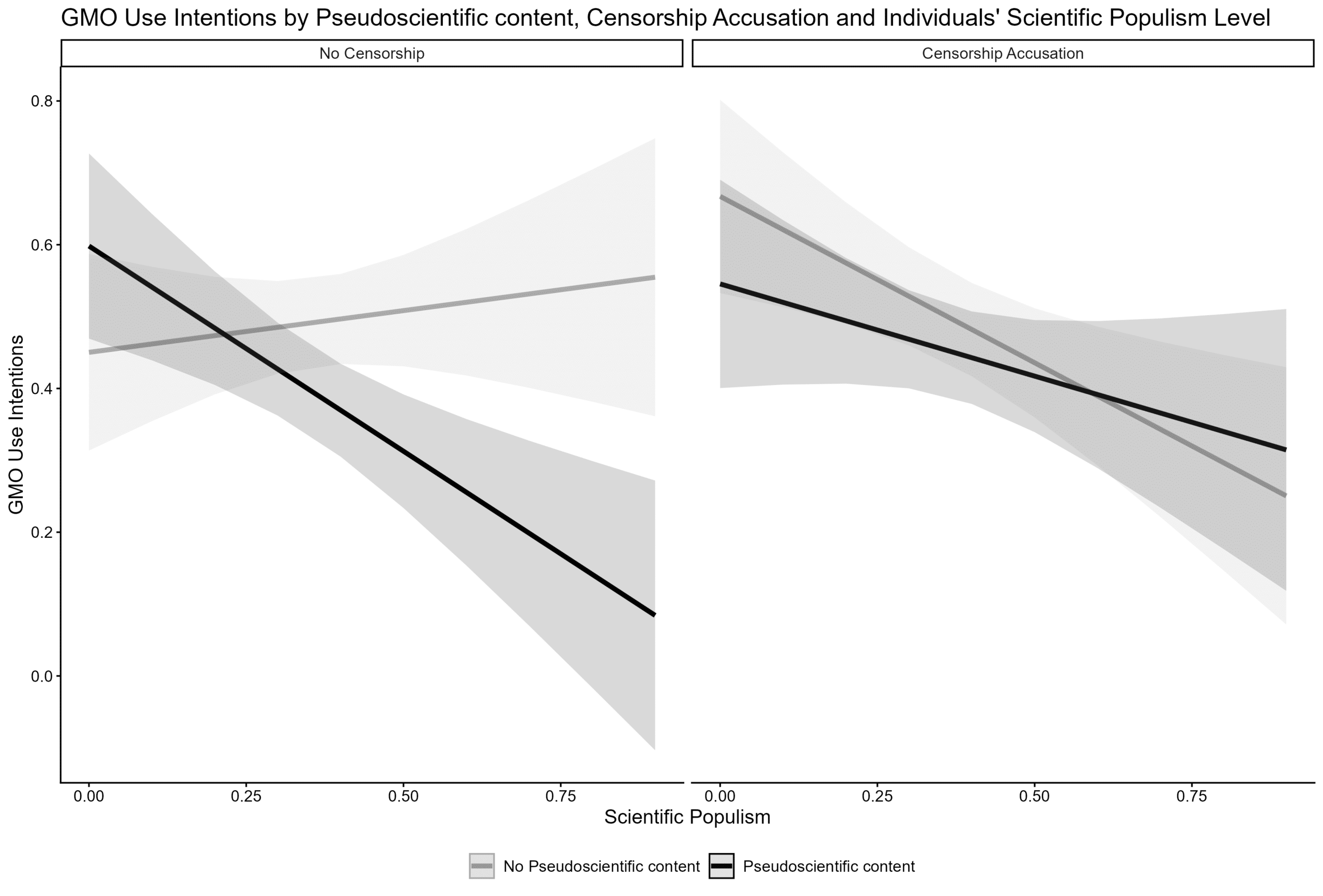
Scientific Populism (SP hereafter): We examined whether SP—a belief that scientific knowledge production is controlled by self-serving elites who suppress dissenting voices (Lerner et al., 2025; Mede et al., 2022; Mede & Schäfer, 2020)—conditions the effects of accusations of censorship. In the absence of accusations of censorship, the effects were inconsistent under pseudoscience conditions; individuals high in SP had higher vaccination intentions but lower GMO consumption intentions (for discussion, see Appendix G). However, the combination of pseudoscientific content and accusations of censorship was associated with lower behavioral intentions to vaccinate and consume GMOs among individuals high in SP. These findings extend our understanding of SP (Lerner et al., 2025; Mede et al., 2022; Mede & Schäfer, 2020). For individuals high in SP, accusations of censorship may function as identity signaling/validation (cf. Kuo & Marwick, 2021), reframing pseudoscientific evidence as “suppressed truths” that align with anti-establishment worldviews. This highlights the importance of interventions that approach high-SP individuals via nonconfrontational strategies, such as peer and crowdsourced fact-checking and norm-based messaging, rather than confrontational ones like debunking or those involving institutional authorities directly (Panizza et al., 2023; Pasquetto et al., 2022). After the BH-FDR adjustment, the SP three-way interaction remained significant for vaccination intention (q = .034) but not for GMO consumption intention (q = .069; see Appendix B, Part 3).
Both of these individual difference moderators (SN and SP) offer a theoretically relevant test and only provisional evidence for the conditional effects of pseudoscience and censorship manipulations; hence, future research should implement high-powered (larger sample size) tests for more conclusive evidence.
Findings
Finding 1: Pseudoscientific content boosted message credibility (vaccine and GMO misinformation), but this effect was limited when paired with accusations of censorship.
For the perceived credibility outcome, data were pooled across the vaccine and GMO contexts to examine the overall effects of pseudoscientific content and censorship (see Appendix C, Part 1 for justifications). We first conducted a one-way ANOVA on the five groups (control and experimental arms), which indicated an overall significant difference in credibility judgments, F (4, 895) = 8.83, p < .001, partial η² = .04. Experimental conditions were then entered as predictors with the control as reference; Tukey’s HSD was used for pairwise comparisons. As the control condition involved an unrelated topic, the comparisons reflect exposure to health misinformation and its four variations (two theoretical manipulations).
There was a significant difference between No-Pseudo/No-Censorship and the control (Mdiff = -0.10, p = .005, Cohen’s d = -0.45); and there was a significant difference between No-Pseudo/Censorship and the control (Mdiff = -0.13, p < .001, Cohen’s d = -0.54). In contrast, Pseudo/No-Censorship did not differ significantly from Control (Mdiff = -0.01, p = .998, Cohen’s d = -0.04), suggesting that the pseudoscientific condition left credibility comparable to that of non-misinformation content, in contrast to the non-pseudoscientific condition.
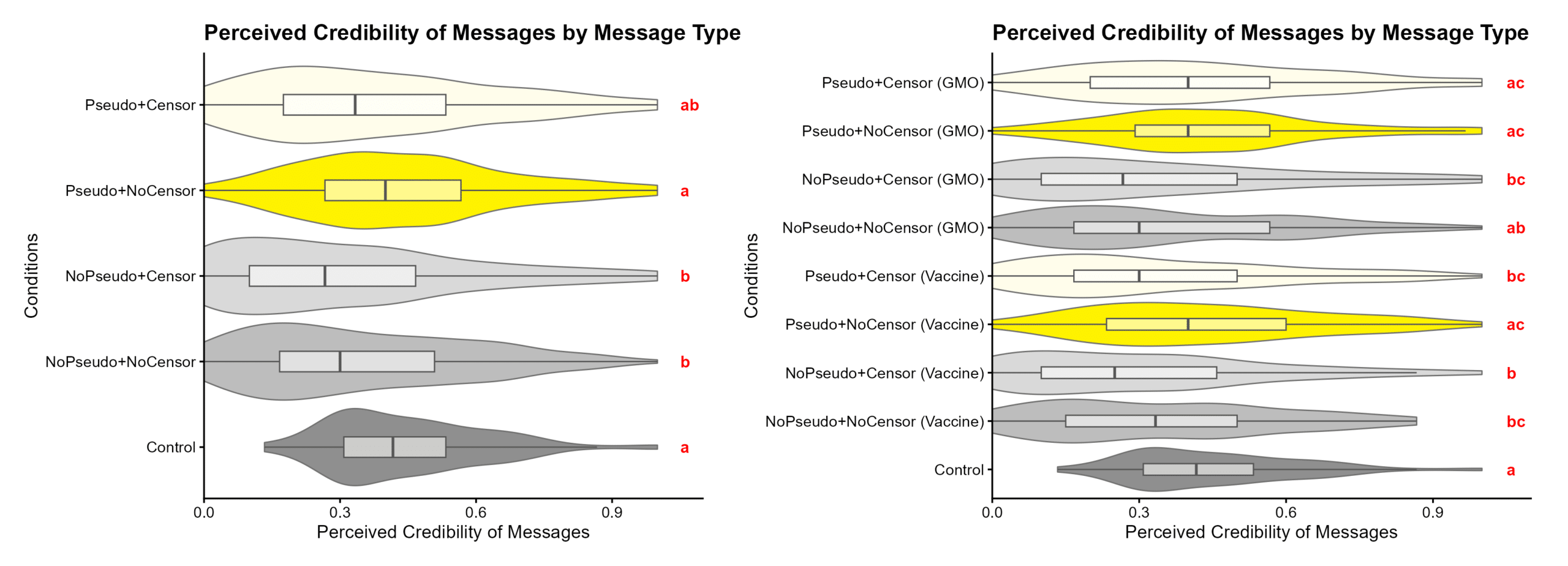
This pattern, however, diminished when pseudoscientific content was paired with a censorship accusation. The Pseudo/Censorship condition did not differ significantly from No-Pseudo/No-Censorship (Mdiff = 0.03, p = .71, Cohen’s d = 0.12), while the Pseudo/No-Censorship condition significantly differed from No-Pseudo/No-Censorship (Mdiff = 0.09, p = .002, Cohen’s d = 0.38). These results indicate that accusations of censorship may undermine the credibility-boosting effect of pseudoscientific content.
Importantly, there was also a significant difference between Pseudo/No-Censorship and No-Pseudo/Censorship (Mdiff = 0.12, p < .001, Cohen’s d = 0.48). Effects are visualized in Figure 1 (left), with issue-level analyses (Figure 1, right) indicating that credibility differences were largely driven by the vaccine context. Factorial analyses excluding the control yielded consistent findings (Appendix F).
Finding 2: Pseudoscientific content increased GMO risk perceptions, but reduced willingness to consume GMOs only when the censorship accusation was absent.
For risk and intention outcomes, the issues are tested separately due to their distinct nature and issue-specific question wording. The one-way ANOVA results revealed significant differences in GMO risk perceptions across the five conditions, F (4, 498) = 4.26, p = .002, partial η² = .03. Tukey’s HSD pairwise comparisons showed that both pseudoscientific conditions elevated GMO risk perceptions relative to control: Pseudo/No-Censorship (Mdiff = 0.15, p = .001, Cohen’s d = 0.57) and Pseudo/Censorship (Mdiff = 0.12, p = .022, Cohen’s d = 0.45; Figure 2, bottom-left).
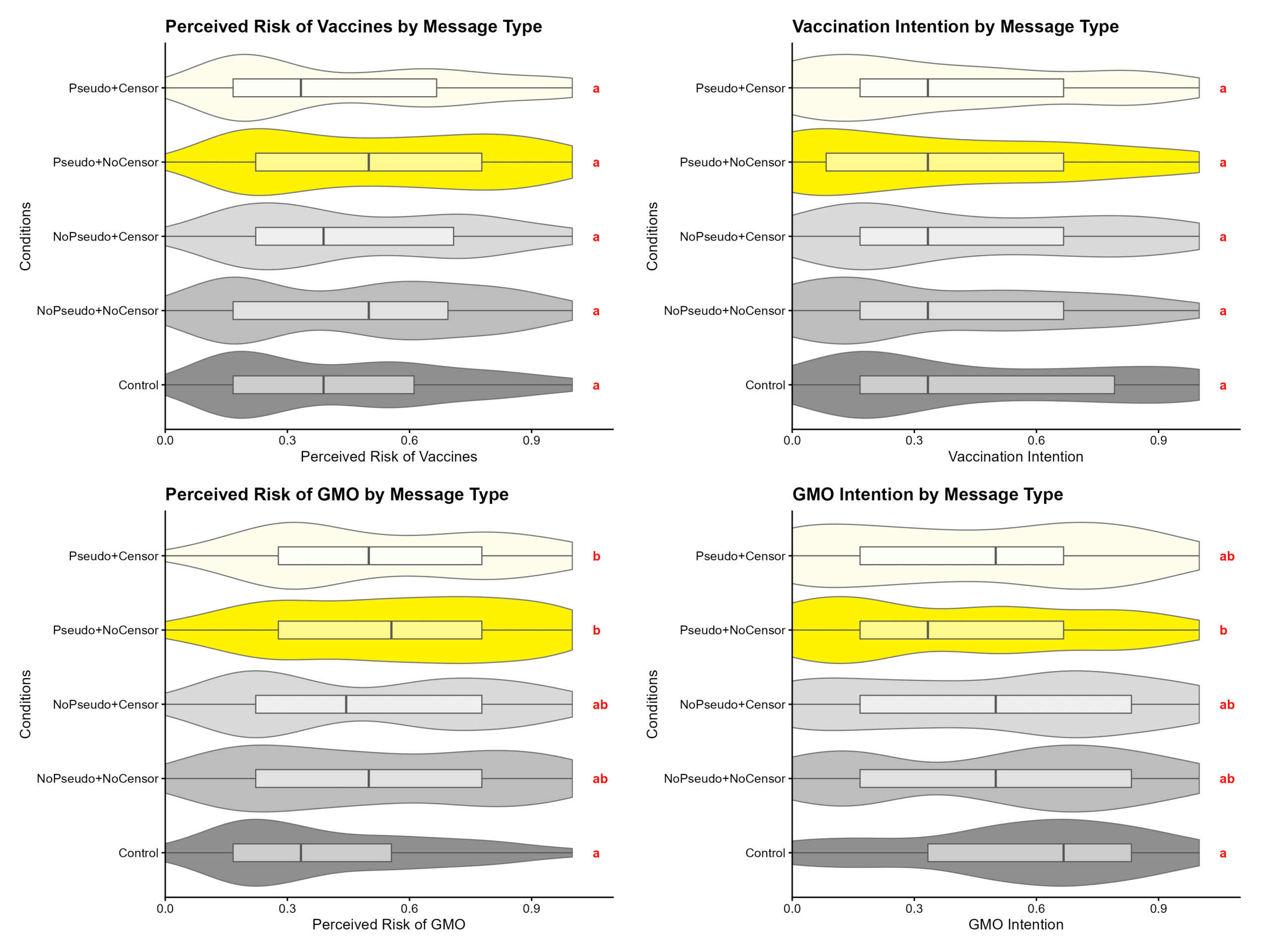
Regarding behavioral intentions, the one-way ANOVA results also showed a significant main effect, F (4, 498) = 3.23, p = .012, partial η² = .03. Regression showed that the Pseudo/No-Censorship condition was the sole message type that significantly reduced GMO consumption intentions compared to the Control group (Mdiff = -0.15, p = .006, Cohen’s d = -0.50; Figure 2, bottom-right). All other conditions (p > .60) did not differ significantly from the Control group. We did the same further analysis reported in Finding 1 for these outcome variables as well (Appendix F).
Finding 3: Among individuals with higher levels of SN, exposure to pseudoscientific content without accusations of censorship was associated with higher perceived vaccine risk.
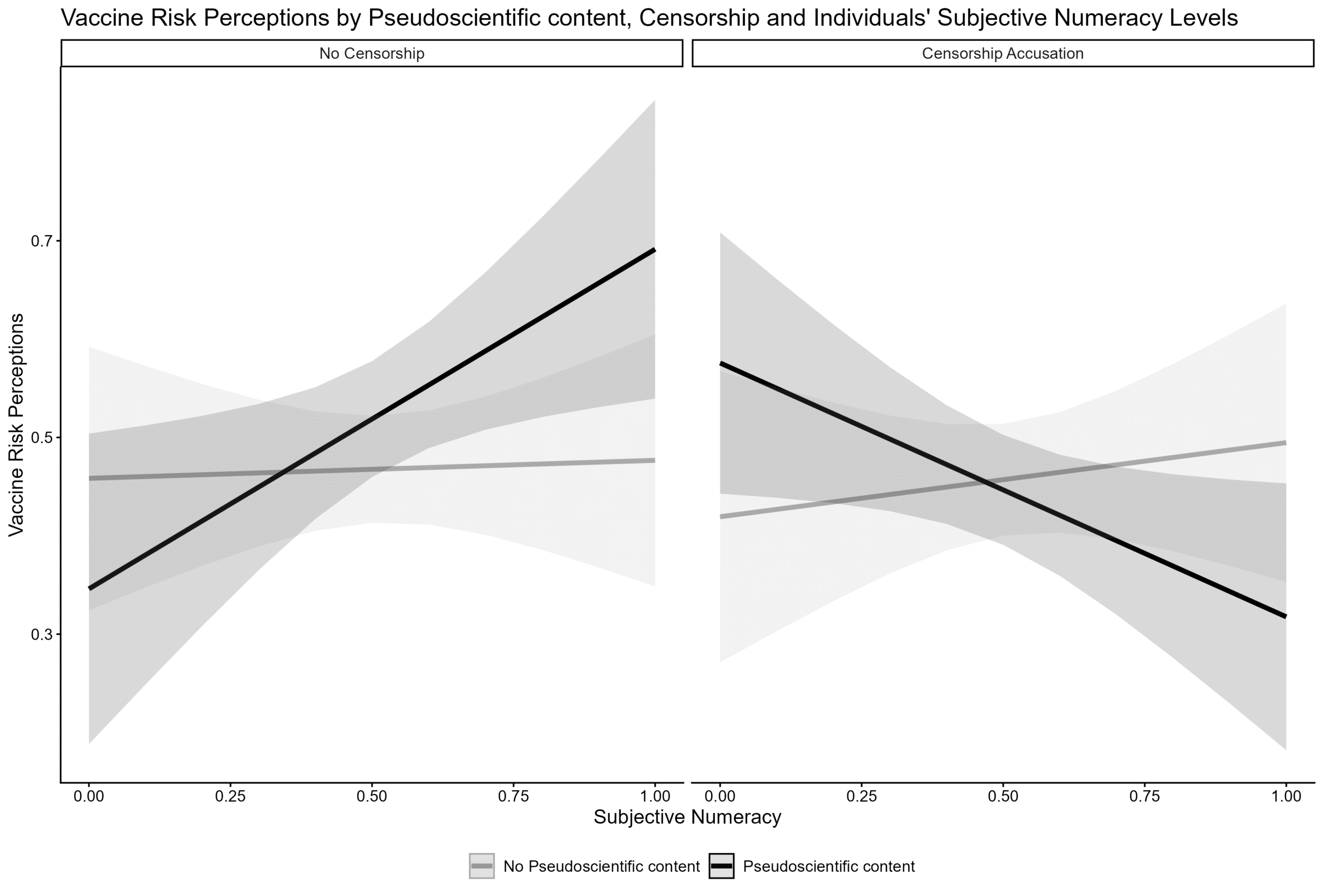
For moderation by individual differences, we relied on the same regression approach (Appendix C, Part 4 provides alternative tests, including the control). A three-way interaction analysis revealed that SN moderated the relationship between the pseudoscientific content and vaccine risk perceptions, contingent on the presence of censorship (b = -0.66, p = .013; adjusted R² = .02). As shown in Figure 3 (left), without censorship, pseudoscientific misinformation increased vaccine risk perceptions among participants with high SN. This pattern seemed to reverse in the Pseudo/Censorship condition (Figure 3, right), where high SN predicted lower risk perceptions. The accusation of censorship thus neutralized the pseudoscience effect on individuals with high SN. This interaction remained significant after BH-FDR adjustment, although its small effect size and limited power warrant cautious interpretation (see Appendix B, Parts 2 and 3 for details and the other correction method of Bonferroni).
Finding 4: Among people with a higher level of SP, combining pseudoscientific content with censorship accusations is associated with lower intentions to vaccinate and lower willingness to consume GMO (higher intentional avoidance of consuming GMO).
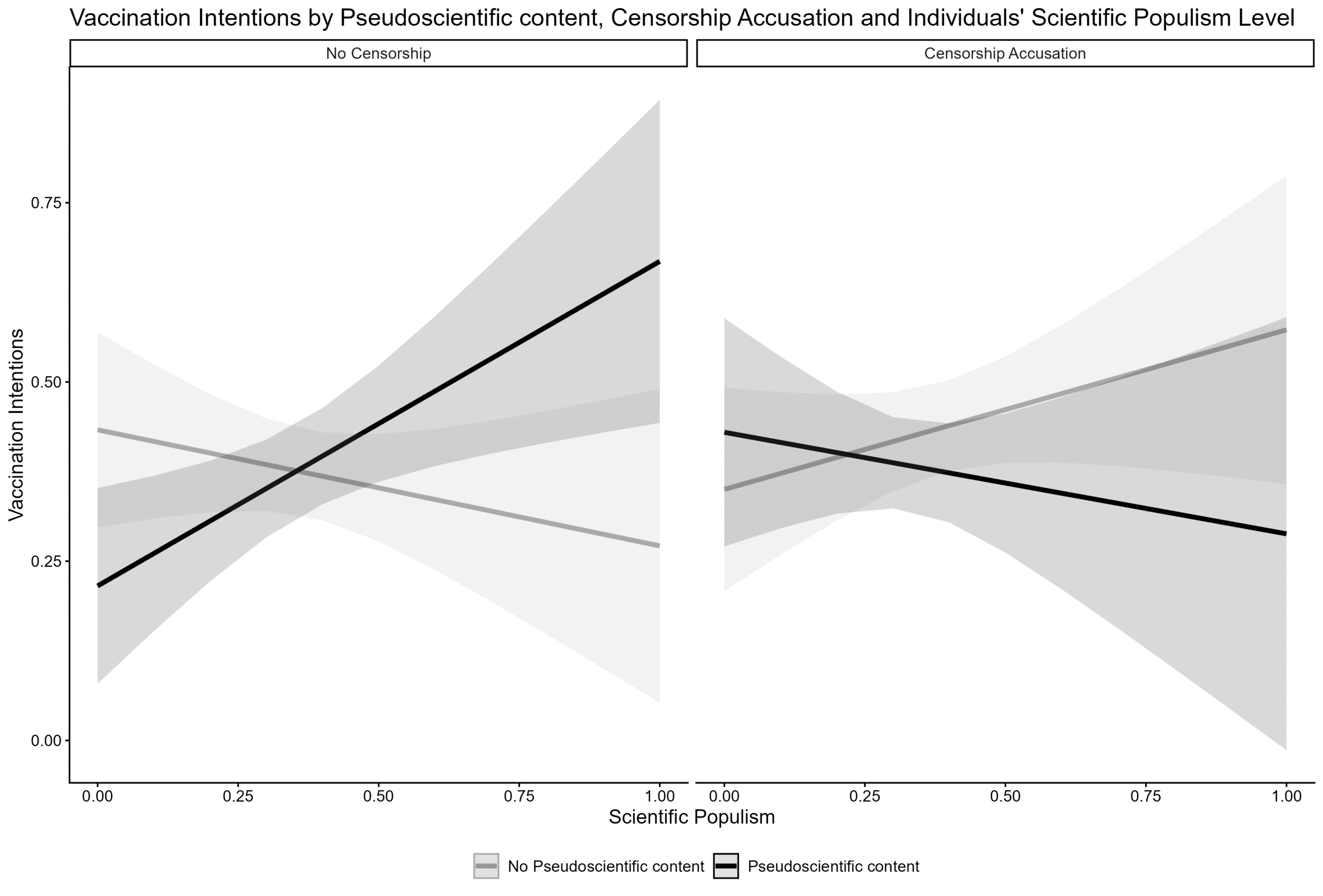
Regressions showed a three-way interaction among pseudoscientific content, censorship accusations, and SP for both vaccination intention (b = −0.98, p = .008) and GMO consumption intention (b = 0.89, p = .009; adjusted R² = .01 and .05, respectively). Across both topics, the influence of pseudoscientific misinformation depended jointly on the presence of censorship cues and individuals’ SP. The corresponding conditional patterns are described below. The vaccination-intention interaction remained significant after BH-FDR adjustment, whereas the GMO consumption-intention interaction did not and should therefore be considered only provisional (Appendix B, Parts 2 and 3, also see the other correction method of Bonferroni).
In the absence of accusations of censorship, individuals high in SP had higher vaccination intentions when exposed to pseudoscientific misinformation (vs. non-pseudoscientific misinformation; Figure 4, left). This pattern reversed when accusations of censorship were present (Figure 4, right); high SP then predicted lower vaccination intentions.
For GMO-related intentions, the pattern seemed to differ. Without censorship, high SP was associated with lower intentions to consume GMOs in the presence of pseudoscientific content (Figure 5, left), the opposite of the vaccine finding. When accusations of censorship accompanied pseudoscientific misinformation (Figure 5, right), high SP again predicted lower intentions to use GMOs. The divergent results observed between the left panels of Figure 4 and Figure 5 may indicate issue-based differences. They may be attributable to the empirical context at the time of data collection, underscoring the importance of conceptual replication by testing these effects across diverse issues (see Appendix G, Part 2, for further discussion). Yet, we caution that the three-way interaction for GMOs was not robust to additional tests and hence is relatively more provisional than the vaccine-intentions-related interaction. Table 1 summarizes the specific effects tested, the corresponding analytical approaches, and the findings.
| Focus | DV(s) | Conditions | Primary analysis | Primary finding |
| Pseudoscientific-content effects | Credibility | Five groups including control, topics pooled (C1; C2+C6, C3+C7, C4+C8, and C5+C9) | One-way ANOVA + Tukey contrasts | Pseudo/No-Censorship produced higher credibility than non-pseudoscientific conditions. Results are largely driven by the vaccine issue. |
| GMO risk perception | Five groups including GMOs and control (C1, C6–C9) | One-way ANOVA + Tukey contrasts | Compared with control, both pseudoscientific message conditions showed higher GMO risk perceptions. | |
| GMO consumption intention | Five groups including GMOs and control (C1, C6–C9) | One-way ANOVA + Tukey contrasts | Pseudo/No-Censorship reduced consumption intention relative to control. | |
| Vaccine risk perception and vaccination intention | Five groups including vaccine and control (C1–C5) | One-way ANOVA + Tukey contrasts | No significant group differences were detected. | |
| Censorship-accusation effects | Credibility | Five groups, including control, topics pooled (C1; C2+C6, C3+C7, C4+C8, and C5+C9) | One-way ANOVA + Tukey contrasts | Censorship accusations did not increase credibility; the pseudoscience advantage appeared smaller when censorship accusations were present. |
| Vaccine risk perception, vaccinationintention, GMO risk perception, and GMO consumption intention | Five groups, including control, topic-specific groups (vaccine: C1–C5; GMO: C1, C6–C9) | One-way ANOVA + Tukey contrasts | No consistent evidence indicated that censorship accusations increased persuasion. | |
| Subjective-numeracy moderation | Vaccine risk perception | Four vaccine groups (C2–C5) | Three-way OLS | Among participants higher in SN, pseudoscientific content was associated with higher vaccine risk without censorship, but not when censorship was present. |
| Perceived credibility, vaccination intention, GMO risk perception, and GMO consumption intention | Four groups (for credibility: C2+C6, C3+C7, C4+C8, C5+C9; for vaccine: C2–C5; for GMO: C6–C9) | Three-way OLS | No corresponding three-way interactions were detected. | |
| Scientific-populism moderation | Vaccination intention | Four vaccine groups (C2–C5) | Three-way OLS | Among participants higher in SP, pseudoscientific content was associated with higher intention without censorship but lower intention when censorship was present. |
| GMO consumption intention | Four GMO groups (C6–C9) | Three-way OLS | Within the pseudoscientific-content conditions, high SP was associated with lower intentions to consume GMOs with or without censorship. | |
| Perceived credibility, vaccine risk perception, and GMO risk perception | Four groups (for credibility: C2+C6, C3+C7, C4+C8, C5+C9; for vaccine: C2–C5; for GMO: C6–C9) | Three-way OLS | No corresponding three-way interactions were detected. | |
| Note: C denotes assigned condition: C1 = Control; C2 = No-Pseudo/No-Censorship Vaccine; C3 = No-Pseudo/Censorship Vaccine; C4 = Pseudo/No-Censorship Vaccine; C5 = Pseudo/Censorship Vaccine; C6 = No-Pseudo/No-Censorship GMO; C7 = No-Pseudo/Censorship GMO; C8 = Pseudo/No-Censorship GMO; and C9 = Pseudo/Censorship GMO. For credibility analyses, corresponding vaccine and GMO conditions were pooled across topics (C2+C6, C3+C7, C4+C8, and C5+C9). Five-group analyses included C1, whereas three-way moderation models excluded C1. OLS = ordinary least squares. | ||||
Methods
We conducted a cross-sectional survey-experiment in January 2024 in Singapore, using an online non-probability sample with demographic quotas collected by Qualtrics (N = 900). Random assignment was successful (Appendix A and B for sample and power analysis).
Manipulations
After consent and pledge, participants completed pre-test questions, the experiment, outcome measures, manipulation checks, and debriefing. The experiment was a mixed factorial design with eight experimental conditions and one control condition:
Pseudoscientific content: Non-pseudoscientific content (N = 405) vs. pseudoscientific content (N = 389). Non-pseudoscientific misinformation made inaccurate claims in plain language without supporting evidence. In contrast, pseudoscientific misinformation adopted a scientific-appearing format, incorporating a more formal tone, structured argumentation, fabricated statistics with wrongful causal interpretation, and a statistical results table. These multiple elements collectively constitute pseudo-scientific manipulation as a package. This approach provides strong ecological validity (a scientific tone in the absence of statistics, or a non-scientific tone in the presence of statistics, is less plausible), though it precludes conclusions about which individual feature drives the observed effects; future research may disentangle or “unbundle” these features’ independent contributions without being too reductionist.
Censorship accusation: The absence (N = 403) vs. presence (N = 391) of censorship accusation. Conditions with a censorship accusation had one additional paragraph at the end, claiming that these facts are censored by the media and big pharma, and, mirroring the heated language in real-world examples, they included explicit mentions of censorship in capital letters and exclamation marks (Appendix D).
Issues (conceptual replication): COVID-19 vaccines (N = 397) and GMOs (N = 397).
Control condition was an unrelated topic (N = 106) with a reading task on baseball rules, including numerical details. Baseball, as a niche sport in Singapore, presents a level of task difficulty comparable to that observed in the experimental conditions. This provides a comparative benchmark for outcome variables, particularly for issue-specific outcomes (Guay et al., 2023; see Appendix C, Part 1, for the rationale for the unrelated Control condition). An unrelated control also serves as a benchmark against the full factorial structure of experimental conditions. Future research can test controls on similar topics to more conservatively isolate the effects.
Outcome variables
Table 2 presents the descriptive statistics. All multi-item scales were averaged into indices from 0 to 1, with higher scores indicating greater levels of the construct. For behavioral intentions, the GMO item was reverse-coded to have consistent directionality with the vaccine measure. Behavioral intentions were measured using single-item indicators, which may be less reliable than multi-item measures. However, in the vaccine literature, single-item measures are primarily used (Fishman et al., 2024). For risk perceptions, we also measured post-test levels and post–pre-test difference scores (Appendix C, Part 3).
| Variable | Items | Response scale | Reliability | M (SD) |
| Perceived credibility (adapted from Albarracín et al., 2024) | 5 items; example: “How accurate do you find the information you just read?” | 7-point: “Not at all accurate” to “Extremely accurate” | α = .94 | .38 (.24) |
| Risk perceptions | 3 items; example: “How risky do you think [side effects of COVID-19 vaccines are / eating GMO is]?” | 7-point: “Not at all risky” to “Extremely risky” | α = .94 | Vax: .46 (.28) GMO: .49 (.29) |
| Behavioral intentions | “How likely are you to get a COVID-19 vaccine (or booster shot) in future if health authorities recommend it for your age group? / avoid buying GMO food?” | 7-point: “Not at all likely” to “Extremely likely” | Single item | Vax: .40 (.32) GMO: .48 (.32) |
| Subjective numeracy(adapted from Fagerlin et al., 2007) | 8 items; example: “How good are you at figuring out how much a shirt will cost if it is 25% off?” | 7-point: “Not at all good” to “Extremely good” | α = .91 | .51 (.22) |
| Scientific populism(adapted from Mede et al., 2021) | 8 items; example: “Scientists are in cahoots with politics and business” | 7-point: “Not at all true” to “Extremely true” | α = .85 | .36 (.18) |
| Note: We also measured objective numeracy (not pre-registered). See Appendix C for related analyses and other pre-registered tests. | ||||
Analysis
We first used one-way ANOVA to test overall differences among experimental conditions. When an omnibus test indicated overall differences, Tukey-adjusted pairwise contrasts were used to locate specific group differences while controlling the familywise Type I error rate within that outcome. We then used OLS regression to test moderation involving the experimental factors and continuous moderators, following recommendations for regression-based experimental designs with interactions (cf. Green & Aronow, 2011). The moderation models excluded the unrelated control because it was not a misinformation condition and therefore had no defined level of either message manipulation (e.g., absence vs. presence of censorship accusation). Alternative analyses including the control yielded broadly similar conclusions (Appendix C, Part 4). Based on reviewer and editorial feedback, we conducted additional robustness checks for multiple comparison adjustments. Benjamini-Hochberg false discovery rate adjustments (Benjamini & Hochberg, 1995) were applied separately to the three-way interaction tests within the credibility, vaccine-outcome, and GMO-outcome families (Appendix B, Part 3). Credibility was pooled across topics as a measure of general message believability and was also tested separately by issue. Risk perceptions and behavioral intentions were analyzed separately by topic because they represent more issue-specific outcomes and question wordings were issue-specific too. We conducted additional analyses treating 1) post-test minus pre-test difference scores and 2) post-test scores as outcomes by controlling for pre-test versions (Appendix C, Part 3). These analyses yielded similar conclusions.
Pre-registration at https://aspredicted.org/FJW_MCH. Data/code: Harvard Dataverse at https://doi.org/10.7910/DVN/OBTXXS. Generative Artificial Intelligence (AI) services were not used at any stage/component of this study. Grammarly was used for proofreading.
Topics
Bibliography
Abhari, R., & Horvát, E.-Á. (2025). “They only silence the truth”: COVID-19 retractions and the politicization of science. Public Understanding of Science, 34(3), 291–306. https://doi.org/10.1177/09636625241290142
Albarracín, D., Fayaz-Farkhad, B., & Granados Samayoa, J. A. (2024). Determinants of behaviour and their efficacy as targets of behavioural change interventions. Nature Reviews Psychology, 3(6), 377–392. https://doi.org/10.1038/s44159-024-00305-0
Albarracin, D., Romer, D., Jones, C., Jamieson, K. H., & Jamieson, P. (2018). Misleading claims about tobacco products in YouTube videos: Experimental effects of misinformation on unhealthy attitudes. Journal of Medical Internet Research, 20(6), Article e229. https://doi.org/10.2196/jmir.9959
Atkinson, M., Ntontis, E., Neville, F., & Reicher, S. (2023). “I’ll wait for the English one”: COVID-19 vaccine country of origin, national identity, and their effects on vaccine perceptions and uptake willingness. Social and Personality Psychology Compass, 17(10), Article e12837. https://doi.org/10.1111/spc3.12837
Baker, S. A. (2022). Alt. Health influencers: How wellness culture and web culture have been weaponised to promote conspiracy theories and far-right extremism during the COVID-19 pandemic. European Journal of Cultural Studies, 25(1), 3–24. https://doi.org/10.1177/13675494211062623
Benjamini, Y., & Hochberg, Y. (1995). Controlling the false discovery rate: A practical and powerful approach to multiple testing. Journal of the Royal Statistical Society: Series B (Methodological), 57(1), 289–300. https://doi.org/10.1111/j.2517-6161.1995.tb02031.x
Berg, A. (2025). Anti-COVID = Anti-science? How protesters against COVID-19 measures appropriate science to navigate the information environment. New Media & Society, 27(2), 1093–1109. https://doi.org/10.1177/14614448231189262
Boudry, M. (2022). Diagnosing pseudoscience by getting rid of the demarcation problem. Journal for General Philosophy of Science, 53(2), 83–101. https://doi.org/10.1007/s10838-021-09572-4
Bowyer, B., & Kahne, J. (2019). Motivated circulation: How misinformation and ideological alignment influence the circulation of political content. International Journal of Communication, 13, 5791–5815. https://ijoc.org/index.php/ijoc/article/view/11527
Cacioppo, J. T., & Petty, R. E. (1982). The need for cognition. Journal of Personality and Social Psychology, 42(1), 116–131. https://doi.org/10.1037/0022-3514.42.1.116
Chavda, V. P., Sonak, S. S., Munshi, N. K., & Dhamade, P. N. (2022). Pseudoscience and fraudulent products for COVID-19 management. Environmental Science and Pollution Research, 29(42), 62887–62912. https://doi.org/10.1007/s11356-022-21967-4
Cheng, I. (2021, November 7). Anti COVID-19 vaccination videos on YouTube channel removed for “violating community guidelines”: MOH. Channel News Asia. https://cnaluxury.channelnewsasia.com/singapore/covid-19-iris-koh-youtube-channel-anti-vaccination-videos-removed-207481
Chinn, S., & Hasell, A. (2023). Support for “doing your own research” is associated with COVID-19 misperceptions and scientific mistrust. Harvard Kennedy School (HKS) Misinformation Review, 4(3). https://doi.org/10.37016/mr-2020-117
Deutsche Welle. (2021, August 29). COVID: Singapore is now the most-vaccinated country. https://www.dw.com/en/coronavirus-digest-singapore-is-now-the-most-vaccinated-country/a-59016931
Ecker, U. K. H., Lewandowsky, S., Cook, J., Schmid, P., Fazio, L. K., Brashier, N., Kendeou, P., Vraga, E. K., & Amazeen, M. A. (2022). The psychological drivers of misinformation belief and its resistance to correction. Nature Reviews Psychology, 1(1), 13–29. https://doi.org/10.1038/s44159-021-00006-y
Evans, A., Sleegers, W., & Mlakar, Ž. (2020). Individual differences in receptivity to scientific bullshit. Judgment and Decision Making, 15(3), 401–412. https://doi.org/10.1017/S1930297500007191
Fagerlin, A., Zikmund-Fisher, B. J., Ubel, P. A., Jankovic, A., Derry, H. A., & Smith, D. M. (2007). Measuring numeracy without a math test: Development of the subjective numeracy scale. Medical Decision Making, 27(5), 672–680. https://doi.org/10.1177/0272989X07304449
Fang, Y. (2024). Why do people believe in vaccine misinformation? The roles of perceived familiarity and evidence type. Health Communication, 39(13), 3480–3492. https://doi.org/10.1080/10410236.2024.2328455
Fishman, J., Schaefer, K. A., Scheitrum, D., Robertson, C. T., & Albarracin, D. (2024). Common measures of vaccination intention generate substantially different estimates that can reduce predictive validity. Scientific Reports, 14(1), Article 22843. https://doi.org/10.1038/s41598-024-69129-5
Geber, S., Ho, S. S., & Ou, M. (2023). Communication, social norms, and the intention to get vaccinated against Covid-19: A cross-country study in Singapore and Switzerland. European Journal of Health Communication, 4(2), 113–139. https://doi.org/10.47368/ejhc.2023.206
Green, D. P., & Aronow, P. M. (2011). Analyzing experimental data using regression: When is bias a practical concern? SSRN. https://doi.org/10.2139/ssrn.1466886
Guay, B., Berinsky, A. J., Pennycook, G., & Rand, D. (2023). How to think about whether misinformation interventions work. Nature Human Behaviour, 7(8), 1231–1233. https://doi.org/10.1038/s41562-023-01667-w
Guo, S., Zhong, Y., & Hu, X. (2025). People are more susceptible to misinformation with realistic AI-synthesized images that provide strong evidence to headlines. Harvard Kennedy School (HKS) Misinformation Review, 6(6). https://doi.org/10.37016/mr-2020-189
Hansson, S. O. (2017). Science denial as a form of pseudoscience. Studies in History and Philosophy of Science Part A, 63, 39–47. https://doi.org/10.1016/j.shpsa.2017.05.002
Hansson, S. O. (2025). Science and pseudo-science. In E. N. Zalta & U. Nodelman (Eds.), The Stanford encyclopedia of philosophy (Fall 2025). Metaphysics Research Lab, Stanford University. https://plato.stanford.edu/archives/fall2025/entries/pseudo-science/
Harrando, I., Cordova, R. R., & Edelmann, A. (2026). Scientific authority cues increase the spread of misinformation. Proceedings of the National Academy of Sciences of the United States of America, 123(20), Article e2535823123. https://doi.org/10.1073/pnas.2535823123
HŠmmerli, A., Beisbart, C., Gruening, D., & Reuter, K. (2025). The illusion of credibility: How the pseudosciences appear scientific. Proceedings of the Annual Meeting of the Cognitive Science Society, 47. https://escholarship.org/uc/item/0c6106pk
Jolley, D., & Douglas, K. M. (2014). The effects of anti-vaccine conspiracy theories on vaccination intentions. PLOS ONE, 9(2), Article e89177. https://doi.org/10.1371/journal.pone.0089177
Jonas, M., Kerwer, M., Chasiotis, A., & Rosman, T. (2024). Indicators of trustworthiness in lay-friendly research summaries: Scientificness surpasses easiness. Public Understanding of Science, 33(1), 37–57. https://doi.org/10.1177/09636625231176377
Krupnikov, Y., Nam, H. H., & Style, H. (2021). Convenience samples in political science experiments. In J. N. Druckman & D. P. Green (Eds.), Advances in experimental political science (pp. 165–183). Cambridge University Press. https://doi.org/10.1017/9781108777919.012
Kuo, R., & Marwick, A. (2021). Critical disinformation studies: History, power, and politics. Harvard Kennedy School (HKS) Misinformation Review, 2(4). https://doi.org/10.37016/mr-2020-76
Kuru, O. (2025). Literacy training vs. psychological inoculation? Explicating and comparing the effects of predominantly informational and predominantly motivational interventions on the processing of health statistics. Journal of Communication, 75(1), 64–78. https://doi.org/10.1093/joc/jqae032
Kuru, O. (2026a, in press). Weaponising the news: Understanding and countering pseudoscience. In S. Chesterman, A. Taeihagh, & A. Yue (Eds.), The Oxford handbook of misinformation and disinformation. Oxford University Press.
Kuru, O. (2026b). Conditioning public opinion perceptions by “Survey Methods 101”: Informing, engaging, and motivating individuals for critical processing of public opinion polls. Public Opinion Quarterly, 90(2), 399–450. https://doi.org/10.1093/poq/nfag006
Kwok, K. O., Li, K.-K., WEI, W. I., Tang, A., Wong, S. Y. S., & Lee, S. S. (2021). Influenza vaccine uptake, COVID-19 vaccination intention and vaccine hesitancy among nurses: A survey. International Journal of Nursing Studies, 114, Article 103854. https://doi.org/10.1016/j.ijnurstu.2020.103854
Lee, C., Yang, T., Inchoco, G. D., Jones, G. M., & Satyanarayan, A. (2021). Viral visualizations: How Coronavirus skeptics use orthodox data practices to promote unorthodox science online. In CHI ’21: Proceedings of the 2021 CHI Conference on Human Factors in Computing Systems (pp. 1–18). Association for Computing Machinery. https://doi.org/10.1145/3411764.3445211
Lerner, B., Hubner, A. Y., & Shulman, H. C. (2025). Science populism impacts perceptions of credibility across scientific professions. Scientific Reports, 15(1), Article 28465. https://doi.org/10.1038/s41598-025-14115-8
Lim, M. K., Sadarangani, P., Chan, H. L., & Heng, J. Y. (2005). Complementary and alternative medicine use in multiracial Singapore. Complementary Therapies in Medicine, 13(1), 16–24. https://doi.org/10.1016/j.ctim.2004.11.002
Luscombe, R. (2025, December 5). Trump administration moves to deny visas to factcheckers and content moderators. The Guardian. https://www.theguardian.com/us-news/2025/dec/05/trump-administration-us-visa-crackdown
Mede, N. G., & Schäfer, M. S. (2020). Science-related populism: Conceptualizing populist demands toward science. Public Understanding of Science, 29(5), 473–491. https://doi.org/10.1177/0963662520924259
Mede, N. G., Schäfer, M. S., & Füchslin, T. (2021). The SciPop scale for measuring science-related populist attitudes in surveys: Development, test, and validation. International Journal of Public Opinion Research, 33(2), 273–293. https://doi.org/10.1093/IJPOR/EDAA026
Mede, N. G., Schäfer, M. S., Metag, J., & Klinger, K. (2022). Who supports science-related populism? A nationally representative survey on the prevalence and explanatory factors of populist attitudes toward science in Switzerland. PLOS ONE, 17(8), Article e0271204. https://doi.org/10.1371/journal.pone.0271204
Morris, J. S. (2025a). Tracking vaccine effectiveness in an evolving pandemic, countering misleading hot takes and epidemiologic fallacies. American Journal of Epidemiology, 194(4), 898–907. https://doi.org/10.1093/aje/kwae280
Morris, J. S. (2025b). The complementary components of the U.S. vaccine safety monitoring system. The Annenberg Public Policy Center of the University of Pennsylvania. https://www.annenbergpublicpolicycenter.org/publication/the-complementary-components-of-the-u-s-vaccine-safety-monitoring-system/
Nadelson, L., Jorcyk, C., Yang, D., Jarratt Smith, M., Matson, S., Cornell, K., & Husting, V. (2014). I just don’t trust them: The development and validation of an assessment instrument to measure trust in science and scientists. School Science and Mathematics, 114(2), 76–86. https://doi.org/10.1111/ssm.12051
Nan, X., Wang, Y., & Thier, K. (2022). Why do people believe health misinformation and who is at risk? A systematic review of individual differences in susceptibility to health misinformation. Social Science & Medicine, 314, Article 115398. https://doi.org/10.1016/j.socscimed.2022.115398
Nera, K., Jetten, J., Biddlestone, M., & Klein, O. (2022). ‘Who wants to silence us’? Perceived discrimination of conspiracy theory believers increases ‘conspiracy theorist’ identification when it comes from powerholders – but not from the general public. British Journal of Social Psychology, 61(4), 1263–1285. https://doi.org/10.1111/BJSO.12536
O’Brien, T. C., Palmer, R., & Albarracin, D. (2021). Misplaced trust: When trust in science fosters belief in pseudoscience and the benefits of critical evaluation. Journal of Experimental Social Psychology, 96, Article 104184. https://doi.org/10.1016/j.jesp.2021.104184
Panizza, F., Ronzani, P., Morisseau, T., Mattavelli, S., & Martini, C. (2023). How do online users respond to crowdsourced fact-checking? Humanities and Social Sciences Communications, 10(1), Article 867. https://doi.org/10.1057/s41599-023-02329-y
Pasquetto, I. V., Jahani, E., Atreja, S., & Baum, M. (2022). Social debunking of misinformation on WhatsApp: The case for strong and in-group ties. Proceedings of the ACM on Human-Computer Interaction, 6(CSCW1), Article 117. https://doi.org/10.1145/3512964
Pennycook, G., & Rand, D. G. (2020). Who falls for fake news? The roles of bullshit receptivity, overclaiming, familiarity, and analytic thinking. Journal of Personality, 88(2), 185–200. https://doi.org/10.1111/JOPY.12476
Peters, E., Västfjäll, D., Slovic, P., Mertz, C. K., Mazzocco, K., & Dickert, S. (2006). Numeracy and decision making. Psychological Science, 17(5), 407–413. https://doi.org/10.1111/j.1467-9280.2006.01720.x
Phillips, S. C., Wang, S. Y. N., Carley, K. M., Rand, D. G., & Pennycook, G. (2025). Emotional language reduces belief in false claims. Judgment and Decision Making, 20, Article e43. https://doi.org/10.1017/jdm.2025.10019
Ronzani, P. (2025). Towards the study of world misinformation. Harvard Kennedy School (HKS) Misinformation Review,6(6). https://doi.org/10.37016/mr-2020-191
Roozenbeek, J., Van Der Linden, S., Goldberg, B., Rathje, S., & Lewandowsky, S. (2022). Psychological inoculation improves resilience against misinformation on social media. Science Advances, 8(34), Article eabo6254. https://doi.org/10.1126/sciadv.abo6254
Schmid, P., & Bauer, H. (2025). Impact of exposure to health misinformation on belief in health misinformation: A meta-analysis of RCTs. Health Communication, 41(5), 877–887. https://doi.org/10.1080/10410236.2025.2536772
Schmid, P., Altay, S., & Scherer, L. D. (2023). The psychological impacts and message features of health misinformation: A systematic review of randomized controlled trials. European Psychologist, 28(3), 162–172. https://doi.org/10.1027/1016-9040/a000494
Shao, A. (2025). New sources of inaccuracy? A conceptual framework for studying AI hallucinations. Harvard Kennedy School (HKS) Misinformation Review, 6(4). https://doi.org/10.37016/mr-2020-182
Sheagley, G., & Clifford, S. (2025). No evidence that measuring moderators alters treatment effects. American Journal of Political Science, 69(1), 49–63. https://doi.org/10.1111/ajps.12814
Singapore Department of Statistics. (2025). Population trends, 2025. Ministry of Trade & Industry, Republic of Singapore. https://www.singstat.gov.sg/publication-resources/population-trends-2025
Skafle, I., Nordahl-Hansen, A., Quintana, D. S., Wynn, R., & Gabarron, E. (2022). Misinformation about COVID-19 vaccines on social media: Rapid review. Journal of Medical Internet Research, 24(8), Article e37367. https://doi.org/10.2196/37367
Suarez-Lledo, V., & Alvarez-Galvez, J. (2021). Prevalence of health misinformation on social media: Systematic review. Journal of Medical Internet Research, 23(1), Article e17187. https://doi.org/10.2196/17187
Udry, J., & Barber, S. J. (2024). The illusory truth effect: A review of how repetition increases belief in misinformation. Current Opinion in Psychology, 56, Article 101736. https://doi.org/10.1016/j.copsyc.2023.101736
VacciNationSG campaign launched to raise awareness of Covid-19 vaccine, combat misinformation. (2021, March 2). The Straits Times. https://www.straitstimes.com/singapore/vaccinationsg-campaign-launched-to-raise-awareness-of-covid-19-vaccine-combat
Vranic, A., Hromatko, I., & Tonković, M. (2022). “I did my own research”: Overconfidence, (dis)trust in science, and endorsement of conspiracy theories. Frontiers in Psychology, 13, Article 931865. https://doi.org/10.3389/fpsyg.2022.931865
Wong, L. P., Alias, H., Danaee, M., Ahmed, J., Lachyan, A., Cai, C. Z., Lin, Y., Hu, Z., Tan, S. Y., Lu, Y., Cai, G., Nguyen, D. K., Seheli, F. N., Alhammadi, F., Madhale, M. D., Atapattu, M., Quazi-Bodhanya, T., Mohajer, S., Zimet, G. D., & Zhao, Q. (2021). COVID-19 vaccination intention and vaccine characteristics influencing vaccination acceptance: A global survey of 17 countries. Infectious Diseases of Poverty, 10(1), Article 122. https://doi.org/10.1186/s40249-021-00900-w
Wright, C., Williams, P., Elizarova, O., Dahne, J., Bian, J., Zhao, Y., & Tan, A. S. (2021). Effects of brief exposure to misinformation about e-cigarette harms on Twitter: A randomized controlled experiment. BMJ Open, 11(9), Article e045445. https://doi.org/10.1136/bmjopen-2020-045445
Wu, Y., & Kuru, O. (2025). From alternative health media to vaccine misbeliefs: The roles of medical folk wisdom and institutional trust. Asian Journal of Communication, 35(3), 203–224. https://doi.org/10.1080/01292986.2025.2481308
Funding
Funding for this study came to O. K. from the National University of Singapore (R-124-000-119-133 / A-0003775-00-00).
Competing Interests
The authors declare no competing interests.
Ethics
The research protocol employed was approved by the institutional review board of the National University of Singapore. Human subjects provided informed consent. Race/ethnicity (Chinese, Malay, Indian, Other), and sex (male, female, other) are reported, as defined by author who used existing measures used in the academic research in the country. These variables were not the central focus in the experimental study but were used to assess the demographic diversity of the sample.
Copyright
This is an open access article distributed under the terms of the Creative Commons Attribution License, which permits unrestricted use, distribution, and reproduction in any medium, provided that the original author and source are properly credited.
Data Availability
All materials needed to replicate this study are available via the Harvard Dataverse: https://doi.org/10.7910/DVN/OBTXXS
Acknowledgements
The authors thank the anonymous reviewers and the editorial team for the constructive and detailed feedback.
Authorship
O. K. designed the study, obtained funding, and collected the data. O. K. and S. Z. analyzed and wrote the paper and worked together on its submission and revisions. O. K. and S. Z. contributed equally; O.K. is the corresponding author (okuru@nus.edu.sg).