
Explore All Articles
All Articles
Article Topic
Amplifying the storm: Climate disinformation dynamics during natural disasters on right-wing extremist Telegram channels
Diego DiMattina, André Sobral and David Nemer
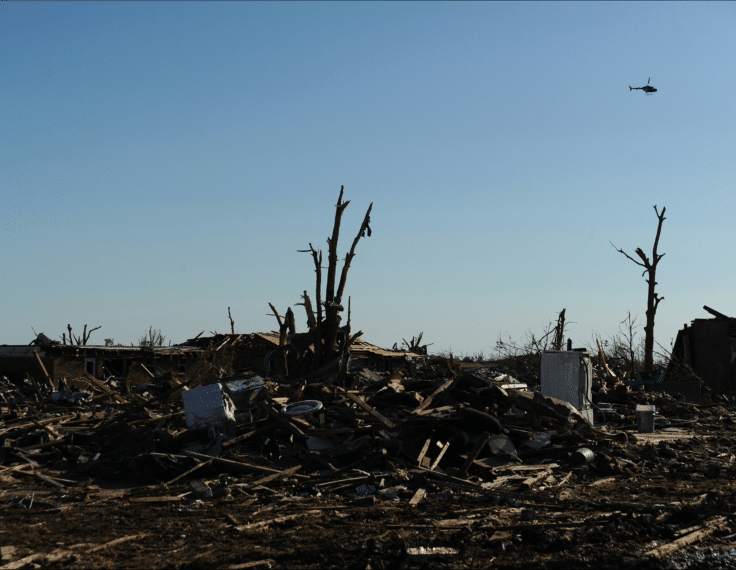
Climate change amplifies natural disasters, posing an existential threat to our society. However, a digital storm is raging on right-wing extremist Telegram channels where climate disinformation works to delegitimize scientific consensus. Investigating the factors that amplify climate disinformation is as critical to combating it as understanding natural disasters and their drivers. We

Fact-Checking
Narrative monitoring and argument-checking: Enhancing effectiveness in countering disinformation beyond fact-checking
Celia Ramos, Clara Jiménez-Cruz and Pablo Hernández-Escayola
In the October 2024 flash floods in Spain, social media posts falsely claimed authorities were concealing the number of casualties. The narrative centered on a flooded parking structure in Valencia, where hundreds of bodies were falsely claimed to be trapped. This narrative gained traction even after videos showing the premises had been evacuated.

Quantifying the “misinformation beat”: 38 years of coverage in major U.S. daily newspapers
Bryce Greene, Brian P. Harper and Christena E. Nippert-Eng
Media have made misinformation conversations part of daily life. We looked at nearly four decades’ worth of news stories about misinformation to see exactly what this coverage looked like. We searched five major U.S. daily newspapers for articles containing the misinformation-related terms—disinformation, misinformation, conspiracy theory, fake news, and propaganda—then extracted words in proximity to these key terms to identify associative patterns.

Not so different after all? Antecedents of believing in misinformation and conspiracy theories on COVID-19
Florian Wintterlin
Misinformation and conspiracy theories are often grouped together, but do people believe in them for the same reasons? This study examines how these conceptually distinct forms of deceptive content are processed and believed using the COVID-19 pandemic as context. Surprisingly, despite their theoretical differences, belief in both is predicted by similar psychological factors—particularly conspiracy mentality and the perception that truth is politically constructed—suggesting that underlying distrust in institutions may outweigh differences in types of deceptive content in shaping susceptibility.

Conspiracy Theories
Using an AI-powered “street epistemologist” chatbot and reflection tasks to diminish conspiracy theory beliefs
Marco Meyer, Adam Enders, Casey Klofstad, Justin Stoler and Joseph Uscinski
Social scientists, journalists, and policymakers are increasingly interested in methods to mitigate or reverse the public’s beliefs in conspiracy theories, particularly those associated with negative social consequences, including violence. We contribute to this field of research using an artificial intelligence (AI) intervention that prompts individuals to reflect on the uncertainties in their conspiracy theory beliefs.

Conspiracy Theories
The climate lockdown conspiracy: You can’t fact-check possibility
Michael P. A. Murphy
The climate lockdown conspiracies claim that a clandestine group of elites are planning to use climate change as a justification to enact widespread lockdowns and curtail freedoms. This conspiracy draws on a wide range of unconnected real-world events and suggests that their possibility of happening again is all the proof required.

Conspiracy Theories
The impact of conspiracy belief on democratic culture: Evidence from Europe
Maik Herold
The spread of conspiracy theories is expected to have an increasing impact on the vitality of Western democracies and their political culture. Drawing on a 2022 survey from 10 European countries (with n = 20,449), this study uses narratives about immigration and COVID-19 to examine their relation to individual democratic attitudes and preferred forms of political participation.

Conspiracy Theories
The relationship between conspiracy theory beliefs and political violence
Adam Enders, Casey Klofstad and Joseph Uscinski
Recent instances of political violence have prompted concerns over the relationship between conspiracy theory beliefs and violence. Here, we examine the relationships between beliefs in various conspiracy theories and three operationalizations of violence—support for political violence, self-reported engagement in political violence, and engagement in non-political conflict.

Conspiracy Theories
Understanding climate change conspiracy beliefs: A comparative outlook
Daniel Stockemer and Jean-Nicolas Bordeleau
Are climate change conspiracy theories widespread across the world, or do we find climate change conspiracy beliefs more so in some countries than in others? This research note explores the prevalence of conspiracy beliefs that identify climate change as a hoax across eight geographically and culturally diverse countries.