
Explore All Articles
All Articles
Article Topic
Elections
Retracted: Disinformation creep: ADOS and the strategic weaponization of breaking news
Mutale Nkonde, Maria Y. Rodriguez, Leonard Cortana, Joan K. Mukogosi, Shakira King, Ray Serrato, Natalie Martinez, Mary Drummer, Ann Lewis and Momin M. Malik
In this essay, we conduct a descriptive content analysis from a sample of a dataset made up of 534 thousand scraped tweets, supplemented with access to 1.36 million tweets from the Twitter firehose, from accounts that used the #ADOS hashtag between November 2019 and September 2020.
Research note: Examining false beliefs about voter fraud in the wake of the 2020 Presidential Election
Gordon Pennycook and David G. Rand
The 2020 U.S. Presidential Election saw an unprecedented number of false claims alleging election fraud and arguing that Donald Trump was the actual winner of the election. Here we report a survey exploring belief in these false claims that was conducted three days after Biden was declared the winner.
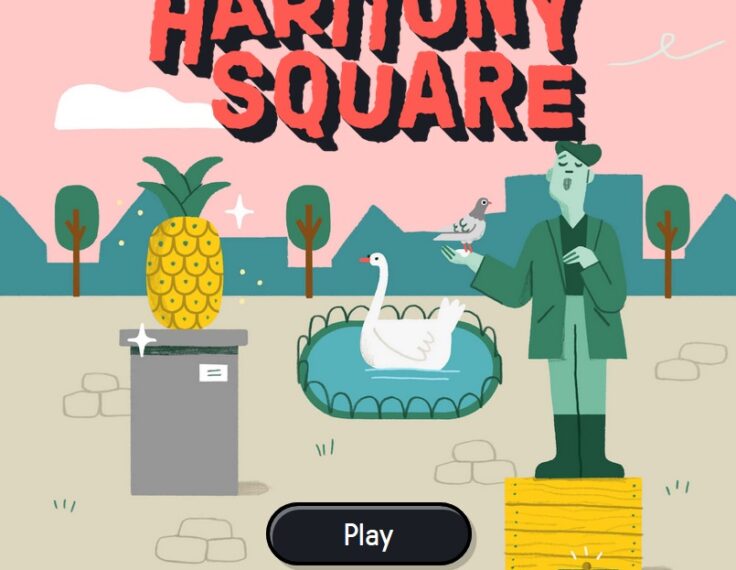
Breaking Harmony Square: A game that “inoculates” against political misinformation
Jon Roozenbeek and Sander van der Linden
We present Harmony Square, a short, free-to-play online game in which players learn how political misinformation is produced and spread. We find that the game confers psychological resistance against manipulation techniques commonly used in political misinformation: players from around the world find social media content making use of these techniques significantly less reliable after playing, are more confident in their ability to spot such content, and less likely to report sharing it with others in their network.
Can WhatsApp benefit from debunked fact-checked stories to reduce misinformation?
Julio C. S. Reis, Philipe Melo, Kiran Garimella and Fabrício Benevenuto
WhatsApp was alleged to have been widely used to spread misinformation and propaganda during the 2018 elections in Brazil and the 2019 elections in India. Due to the private encrypted nature of the messages on WhatsApp, it is hard to track the dissemination of misinformation at scale.
“Fake news” may have limited effects beyond increasing beliefs in false claims
Andrew M. Guess, Dominique Lockett, Benjamin Lyons, Jacob M. Montgomery, Brendan Nyhan and Jason Reifler
Since 2016, there has been an explosion of interest in misinformation and its role in elections. Research by news outlets, government agencies, and academics alike has shown that millions of Americans have been exposed to dubious political news online. However, relatively little research has focused on documenting the effects of consuming this content.